Basement dampness is a common issue that can lead to structural damage and health problems if not addressed promptly. Basement damp proofing and waterproofing knowledge helps homeowners identify the causes of moisture, choose effective solutions, and follow practical maintenance steps.
Moisture control helps protect the building fabric, reduces mould risk, and can make the basement safer for everyday use. Waterproofing techniques, professional treatments, and preventive measures all play an important role in helping keep the basement dry, stable, and better protected from long-term damp problems.
Do You Recognize The Early Signs Of Basement Damp And Moisture Issues?
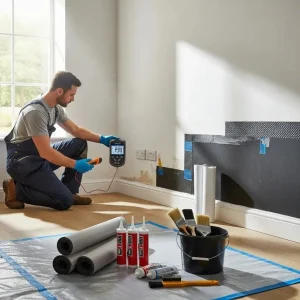
Recognizing the early signs of basement dampness is important for effective intervention. Common indicators include visible mould growth on walls or ceilings, peeling paint or wallpaper, persistent musty odours, and damp patches or discolouration on surfaces.
Rising, Penetrating, And Condensation Damp In Basements
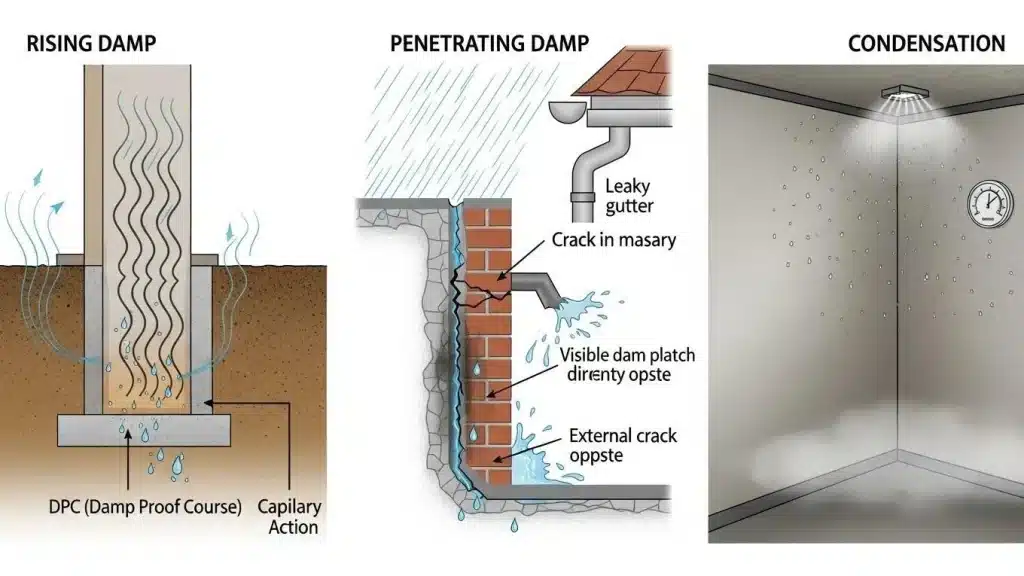
Rising damp occurs when moisture ascends through walls from the ground due to a faulty or missing damp-proof course. Typical signs include tide marks on the lower sections of walls accompanied by a damp, musty smell.
Penetrating damp arises when water finds its way through walls from external sources such as faulty gutters, leaking pipes, or damaged brickwork. This condition often manifests as irregularly shaped damp patches and visible water stains on walls.
Condensation results from excess humidity combined with poor ventilation, causing moisture to collect on cold surfaces. Signs of condensation include water droplets on windows, mould growth on walls and ceilings, and an overall damp feeling within the basement.
Early Basement Damp Detection In Period Properties
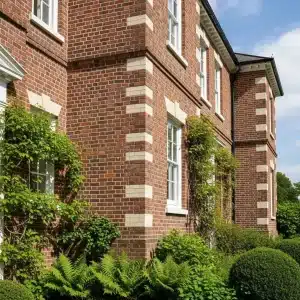
Period properties tend to be more vulnerable to damp problems due to their age, construction methods, and the materials used. Early detection is critical to reducing the risk of extensive damage to historic features, supporting structural integrity, and limiting expensive repairs.
Prompt attention to dampness also supports occupant health by minimising exposure to mould-related respiratory issues. Regular inspections help identify small moisture changes before they spread through walls, floors, or timber. Using suitable repair methods also helps preserve the property’s character while improving long-term protection.
Which Basement Waterproofing Methods Work Best For Your London Property?
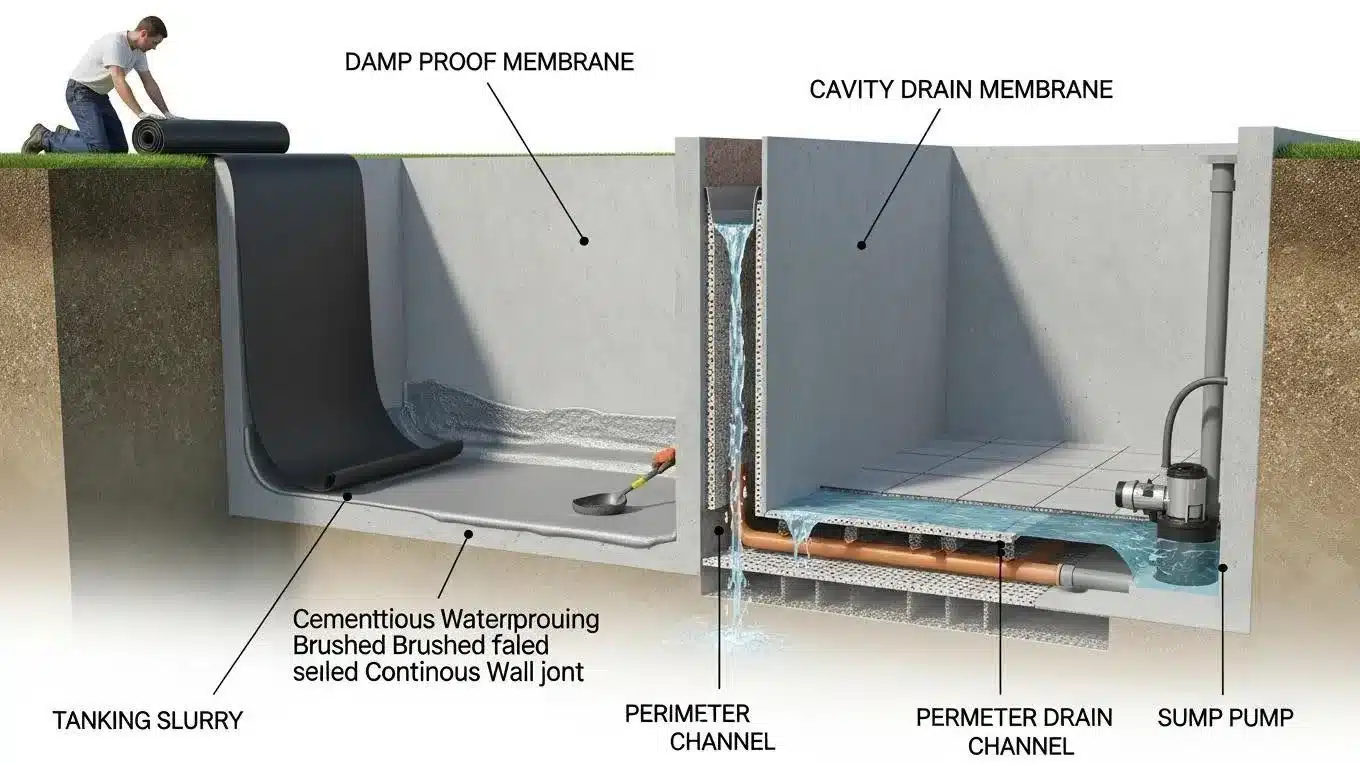
London homes, especially those with historical significance, may need waterproofing strategies that help protect the basement while respecting the building’s original character. Common methods suitable for these basements include membranes, tanking, and cavity drain systems.
Comparing Waterproofing Membranes, Tanking, And Cavity Drain Systems
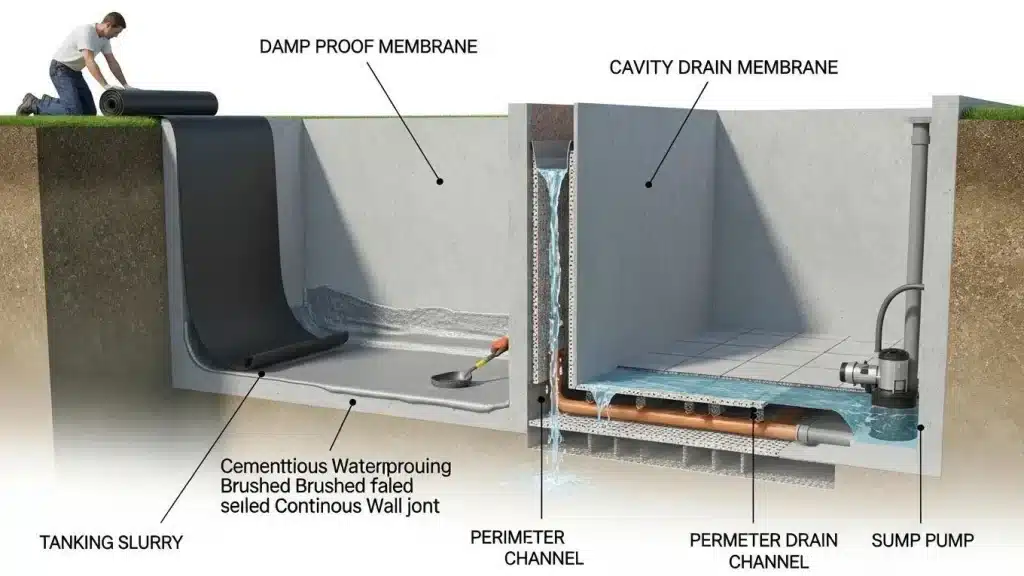
- Each waterproofing technique offers different benefits depending on the basement condition and moisture level.
- Damp-proof membranes use thin barrier sheets to help stop moisture from passing through walls and floors.
- Membranes can be installed internally or externally, depending on access and the source of damp.
- Tanking creates a continuous waterproof layer and works well in areas with heavy moisture pressure.
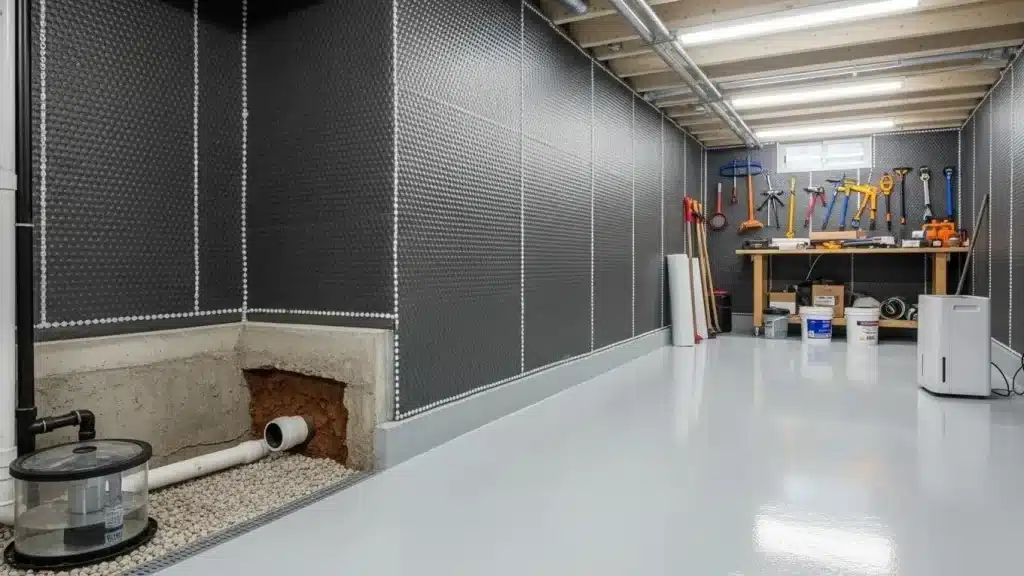
- Cavity drain systems collect and direct water to sump pumps, making them suitable for serious water ingress.
Specialist Techniques For Waterproofing Historic And Period Basements
- Period basements need waterproofing methods that help protect original heritage features.
- Non-invasive techniques reduce the risk of damage to historic walls, floors, and finishes.
- Breathable materials help moisture escape without trapping damp inside the building fabric.
- Reversible treatments are preferred because they can be adjusted without permanent harm.
- Lime-based renders and ventilated cavity systems can provide moisture control while helping preserve character.
What Damp Proofing Solutions Should You Consider For Your Period Property’s Basement?
Period buildings may need damp proofing that manages moisture without damaging original materials. Breathable renders, suitable damp-proof courses, and vapour-permeable coatings can help protect both structure and character.
Tailored Treatments For Rising Damp And Condensation Control
- Rising damp in heritage properties needs careful treatment to protect historic materials.
- Chemical damp-proof courses may be inserted where they suit the original masonry.
- Compatible physical barriers can also help control moisture without damaging the structure.
- Condensation control should use discreet ventilation and humidity devices that help protect the building fabric.
Consultative Approaches To Diagnosing And Treating Damp
- A detailed consultation helps identify damp problems before treatment begins.
- Experts assess the building’s condition, materials, and construction methods.
- Moisture sources are checked carefully to create a suitable treatment plan.
- A sensitive approach can address damp while helping protect the property’s character.
How Much Should You Expect To Pay For Professional Basement Waterproofing And Damp Proofing?
The cost of expert waterproofing and damp proofing services varies significantly and is influenced by factors such as the property’s size, type, and the severity of damp issues present.
Factors Influencing Basement Waterproofing Costs
Several key elements affect the pricing of basement waterproofing in London. Older properties, for example, may need specialist treatment techniques that increase costs. More complex systems, like cavity drain solutions with pumps and drainage infrastructure, typically cost more than simpler membrane installations.
Severe or extensive damp problems require more intensive remediation, increasing the overall cost. Challenges related to difficult site access or labour needs can also raise installation costs.
Consultation, Diagnosis, And Treatment Pricing
The financial breakdown often starts with consultation and diagnostic fees, followed by charges for treatment and installation. Many waterproofing professionals offer comprehensive package pricing that covers assessment, materials, and labour.
To help ensure value for money, it is important to request detailed quotes and clarify the full scope of work before proceeding. Comparing warranties, maintenance support, and aftercare services can also help homeowners choose the most reliable option.
Why Choose Environ Restoration Services For Basement Damp Proofing?
At Environ Restoration Services, we provide basement London damp proofing and waterproofing solutions for period and heritage properties. We understand older buildings need careful treatment, so our work aims to balance moisture control with preservation of historic character.
Our team carries out detailed site assessments to identify the cause of damp before recommending suitable treatments, such as breathable lime-based renders, discreet damp-proof courses, and basement tanking systems.
Where possible, we use conservation-sensitive and minimally invasive methods to help protect original walls, floors, and features. We also offer clear consultations, transparent quotes, and support from inspection through installation and aftercare.
Frequently Asked Questions
What Are The Long-Term Consequences Of Ignoring Basement Dampness?
Ignoring basement dampness can lead to severe structural damage, including weakening of the foundation and deterioration of building materials. Persistent moisture can also foster mould growth, which poses health risks, including respiratory issues and allergies.
How Often Should I Have My Basement Inspected For Dampness?
It is advisable to inspect your basement for dampness at least once a year, or more frequently if you live in areas with high humidity or have previously encountered damp issues. After severe weather events like heavy rains or snowmelt, a prompt inspection is recommended.
Can I Diy Basement Waterproofing, Or Should I Hire Professionals?
While some basic waterproofing measures, like sealing cracks and applying masonry waterproofing paint, can be done as DIY projects, professional assessment and treatment are highly recommended for serious damp issues.
What Steps Can I Take To Improve Ventilation In My Basement?
Improving ventilation in your basement can help reduce condensation and dampness. Start by ensuring that existing windows or vents are unobstructed. Adding extractor fans, using portable dehumidifiers, and installing mechanical ventilation systems help enhance air circulation.