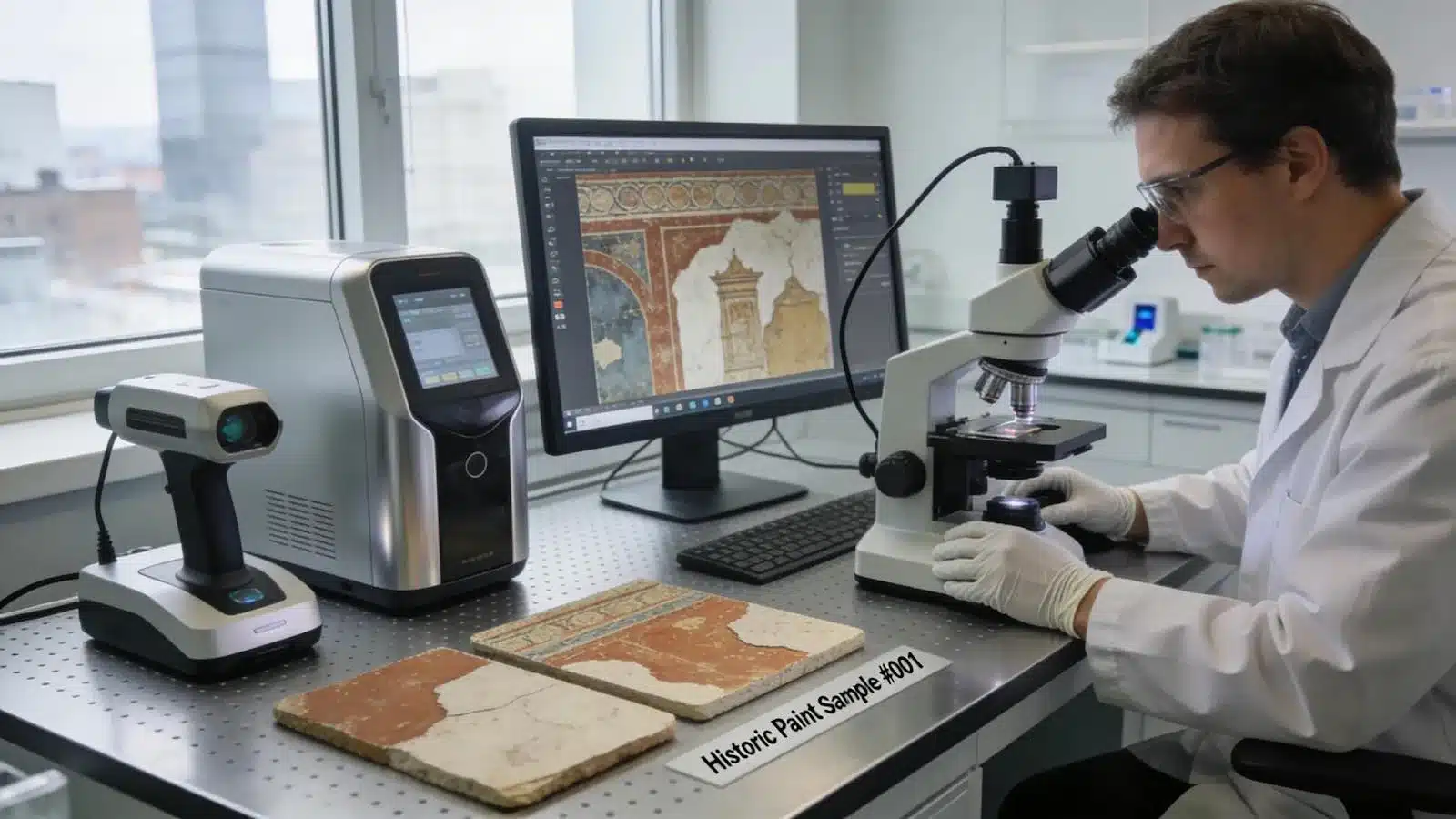
Historic paint analysis is the examination of paint layers to reveal their composition and application history. It can provide valuable evidence for the preservation and restoration of period properties. By understanding the techniques employed in paint analysis, property owners and restorers can make better-informed decisions that support historical accuracy and authenticity.
Today, this article explores the primary methods used in historic paint testing, the significance of these techniques in restoration projects, and how they contribute to maintaining the integrity of heritage architecture. We will discuss the methods, their relevance to restoration work, and advances in paint conservation techniques to provide a comprehensive overview of this essential field.
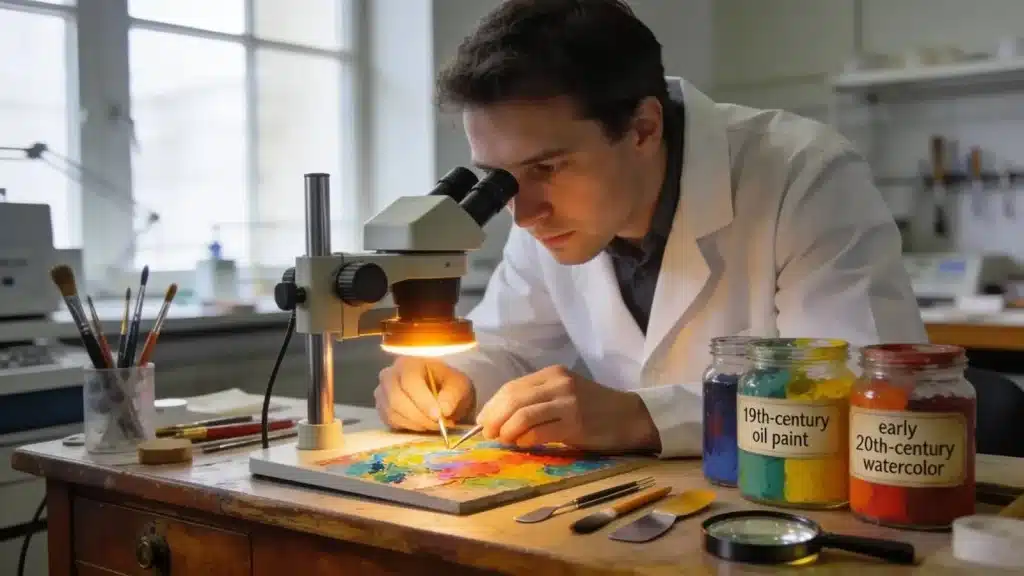
What Are the Primary Methods Used in Historic Paint Testing?
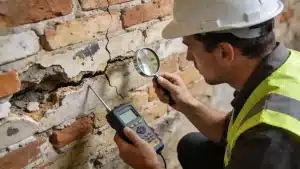
The analysis of historic paints generally involves several key methods for understanding a material’s composition and history. These include paint layer stratigraphy, microscopy, and various spectroscopic techniques, which can reveal historical information embedded within the paint layers.
This detailed approach to testing supports informed restoration decisions and can help maintain the integrity of historical properties.
Paint Layer Stratigraphy for Identifying Historical Coatings
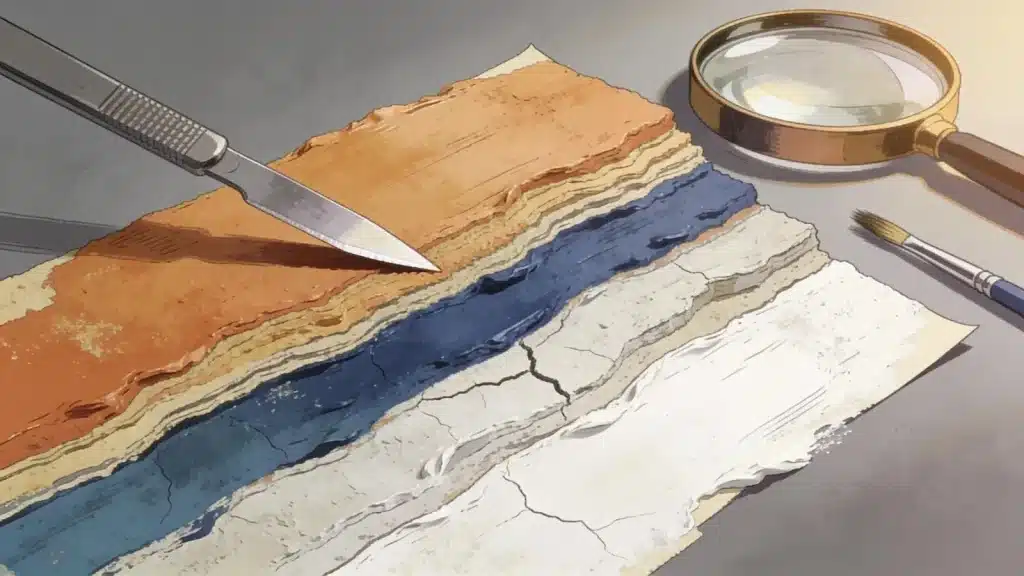
Paint layer stratigraphy involves examining the layers of paint applied to a surface to identify the original coating and subsequent applications. This method uses cross-sectional analysis to uncover the chronological sequence of paint layers, revealing changes in color and composition over time.
By analyzing these layers, restorers can investigate original colours and coating sequences. Further testing may help identify paint materials and application techniques. This knowledge is valuable for helping restoration work respect the building’s historical integrity and aesthetic.
Microscopy and Spectral Analysis for Paint Pigment Identification
Microscopy and spectroscopic techniques can help identify paint pigments and investigate their composition. Microscopic techniques allow for the examination of the physical properties of paints, including particle size and distribution, which can indicate the manufacturing processes used historically.
Spectral analysis, on the other hand, utilizes light to identify chemical components in pigments, facilitating accurate identification of the materials used. Together, these methods enhance the understanding of paint evolution and inform decisions on suitable restoration materials.
Why Is Historic Paint Analysis Crucial for Period Property Restoration?
Maintaining the authenticity of period properties relies heavily on accurate historic paint analysis. This process ensures that restorations honor the original character of a building while adhering to conservation standards and best practices.
By understanding the composition and application history of the original materials, custodians can make choices that enhance the building’s longevity and cultural significance.
Paint Testing for Authenticity and Conservation Standards
Paint testing directly influences authenticity in restoration practices by setting standards based on the findings. Results from thorough analysis help dictate which materials and methods should be used in restoration projects to comply with conservation guidelines.
These guidelines often derive from established practices in the field, which are informed by empirical research and case studies, ensuring that restorations not only meet aesthetic expectations but also preserve historical integrity.
Benefits of Accurate Paint Analysis for Long-Term Property Maintenance
Accurate paint analysis provides several long-term benefits, particularly in terms of maintenance and sustainability. By understanding the properties and requirements of original materials, property owners can develop strategies that minimize future restoration needs, ultimately saving costs and preserving historical accuracy.
For example, accurate identification of materials facilitates the use of appropriate replacement products, ensuring that restorations stand the test of time.
How Does Environ Restoration Services Support Clients with Expertise in Paint Analysis?
Environ Restoration Services plays a pivotal role in assisting clients through its specialized expertise in historic paint analysis. The company’s focus on property restoration and maintenance, especially for period and historic buildings, ensures that clients receive tailored solutions that respect and enhance architectural authenticity.
Specialised Paint Diagnostic and Consultation Services in London
Environ Restoration Services provides a range of diagnostic and consultation services designed to meet the unique needs of clients in London. These services include comprehensive paint analysis, tailored restoration strategies, and expert consultations on best practices for preserving historic properties.
With hands-on experience and knowledge of local regulations and historical standards, the team offers invaluable insights that aid in accurate and respectful restorations.
Period Paint Restoration Case Studies for Client Guidance
Utilizing real-life case studies of successful period paint restorations enhances the consulting process. These documented projects serve as reference points, illustrating effective strategies, common pitfalls, and ultimate outcomes.
By analyzing previous work and adjustments made throughout projects, Environ Restoration Services guides clients to make informed decisions about their own restoration practices, fostering confidence and assurance in the process.
What Are the Latest Heritage Paint Conservation Techniques and Materials?
As the field of heritage conservation evolves, new techniques and materials continuously emerge. Understanding these advancements ensures that restoration practices incorporate the best available knowledge and functionality.
Traditional Paint Materials and Chemistry in Restoration
Contemporary conservation strategies often involve identifying traditional paint materials and their chemical properties. Techniques such as Fourier Transform Infrared Spectroscopy (FTIR) and Gas Chromatography-Mass Spectrometry (GC-MS) provide insights into the constituents of historic paints, allowing restorers to select authentic materials for repairs.
These modern scientific methods work in tandem with traditional knowledge, ensuring that restorations remain in harmony with the original designs.
Advances in Non-Destructive Testing and Digital Imaging for Historic Paint Analysis
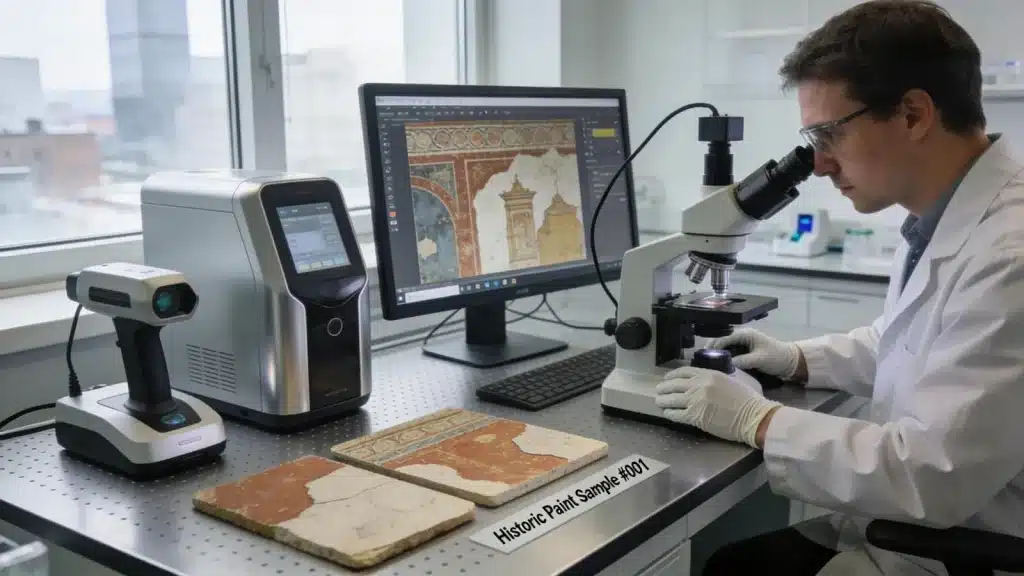
Recent innovations in non-destructive testing (NDT) and digital imaging, such as reflectance transformation imaging (RTI), are transforming how historic paint analysis is conducted.
These technologies offer detailed insights into paint conditions and compositions without affecting the surface, allowing for thorough examination while preserving the integrity of the original materials. This advancement is revolutionizing the field, enabling more effective planning and execution of conservation projects.
Historic Paint Analysis and Environ Restoration Services
At Environ Restoration Services, we work with period, historic, and heritage properties across London. We understand the importance of preserving original features and finishes. Careful investigation can help us understand a building before restoration work begins.
Our restoration process can include a detailed property survey and assessment. This helps identify the condition of existing materials and areas that need attention. We can then plan restoration work around the character and requirements of the property.
Environ Restoration Services combines traditional craftsmanship with modern restoration techniques. Our approach focuses on protecting historic fabric wherever possible. We tailor our restoration plans to the individual building rather than using the same solution for every property.
Frequently Asked Questions
What Is Historic Paint Analysis and Why Does It Matter for Period Properties?
Historic paint analysis is the scientific examination of paint layers on a building’s surfaces to reveal their composition, colour history, and application sequence over time. For period and heritage properties, this process is essential because it allows conservators and restorers to identify the original coatings, understand how a building’s appearance evolved, and base restoration decisions on documented evidence rather than guesswork. By grounding every decision in factual analysis, property owners can preserve historical accuracy and authenticity while protecting the long-term cultural and architectural value of the building.
What Can Historic Paint Analysis Reveal About a Building’s Past?
Beyond identifying colour, historic paint analysis reveals a wealth of information about a building’s history. Cross-sectional stratigraphy uncovers the full chronological sequence of coatings applied over the years, showing when redecoration occurred and how finishes changed. Microscopy and spectral analysis add detail on pigment composition, particle size, and manufacturing techniques, offering clues about the historical period and processes used. Together, these findings paint a detailed picture of a property’s decorative evolution, helping restorers understand not just what colours were used, but how and when the building was altered over time.
Who Should Commission a Historic Paint Analysis Survey?
Historic paint analysis is most valuable for owners, custodians, and restorers of period and heritage properties who want restoration work to remain historically accurate. This includes anyone undertaking redecoration, repair, or full restoration of a building where original finishes matter, as well as those seeking to comply with conservation standards and best practice guidelines. Specialists such as Environ Restoration Services support these clients with tailored diagnostic and consultation services, using their expertise in period buildings to ensure that decisions about paint and finishes respect the property’s architectural authenticity and long-term integrity.
How Does Historic Paint Analysis Differ From Ordinary Paint Testing?
While general paint testing might simply check the condition or type of a current coating, historic paint analysis is a more rigorous, layered investigation into a building’s decorative history. It combines methods such as paint layer stratigraphy, microscopy, and spectral analysis to examine every layer applied over time, rather than just the surface finish. This detailed approach identifies original pigments, historical techniques, and chronological changes, giving restorers the evidence needed to make informed decisions that a simple visual or surface-level paint test could never reveal.