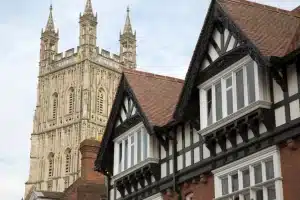
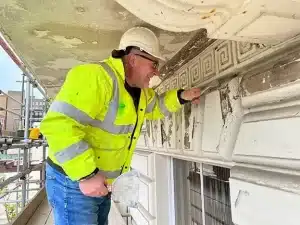
Cleaning stone masonry professionally is about removing harmful deposits while protecting the stone’s fabric and long-term appearance.
In this guide, we set out conservation-led, low-risk approaches used in London, explain when to call a surveyor or contractor, and describe how specialists diagnose efflorescence, black staining, and biological growth.
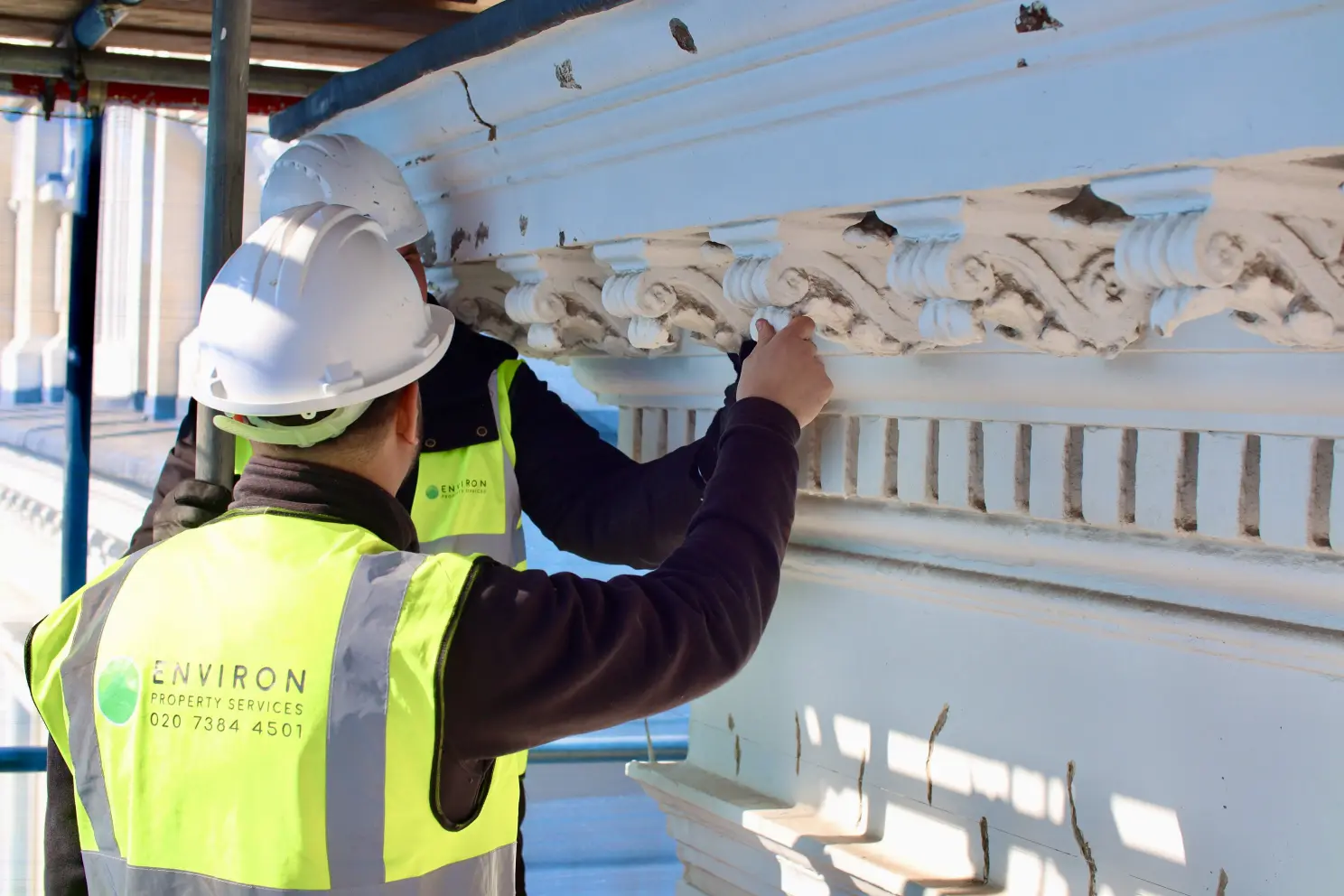
You’ll find guidance on which treatments suit sandstone, limestone, granite, and marble, plus practical step-by-step advice and guidance on commissioning a site survey and quote. If you need a tailored survey or restoration plan, this article clarifies the next steps to safeguard heritage or high-value properties.
What Are The Key Professional Stone Cleaning Services In London?
Professional stone cleaning in London combines diagnostic surveys with bespoke cleaning, repair, and protection to conserve masonry safely. A survey establishes stone type, previous repairs, and moisture paths, so the chosen method avoids abrasive damage and long-term harm.
Many contractors package cleaning with repointing, damp treatment, and breathable protection so the root causes are addressed, not just the surface appearance. For listed or heritage façades, works must be documented and compliant with conservation requirements.
Typical professional offerings and why owners choose them:
- Diagnostic Survey and Report: Determines stone type, condition, and moisture/salt paths before any work starts.
- Conservation‑Led Cleaning: Low‑impact methods selected to match the stone and its state.
- Repointing and Repair: Addresses failed mortar and fixes structural causes of staining or salt migration.
These bundles reduce repeat work and protect value by tackling both appearance and underlying deterioration. Most owners request a site‑specific survey and formal quote to define a conservation‑led cleaning and maintenance plan.
Stone Types Our Experts Clean And Restore
Stone type governs cleaning choices: porosity and mineralogy affect how stains form and how the surface responds to treatment. Limestone and sandstone are porous and vulnerable to strong alkalis and aggressive pressure, so gentler methods are used.
Granite and other hard igneous stones tolerate more mechanical action but still require compatible detergents to avoid discolouration. Marble is calcareous and reacts to acids; specialist non-acidic poultices and controlled steam are the usual approaches for delicate surfaces.
Knowing a stone’s absorption, surface strength, and any previous repairs guides whether to use steam, poultices, micro-abrasion, or a DOFF/TORC-style system. Where stone is listed, friable or set in historic lime mortars, a specialist team is essential to avoid irreversible damage and to meet conservation standards.
How Professional Cleaning Protects Heritage And High‑end Properties
Conservation‑led cleaning follows principles of minimal intervention, reversibility, and long‑term durability. Practitioners choose methods that remove damaging deposits without stripping original finishes or weakening the surface layer.
Correctly executed work reduces trapped moisture and biological regrowth, protecting the fabric and preserving market value. Clear documentation and accredited techniques give owners confidence that interventions follow best practice for listed or high‑value buildings.
On complex façades, cleaning is combined with remedial works such as breathable repointing and targeted damp control, so results endure. This integrated approach limits the need for repeat cleaning and helps preserve the building’s authenticity.
What Are The Main Stone Cleaning Methods For Masonry?
Common professional methods include DOFF, TORC, controlled steam, low‑pressure washing, and targeted chemical poultices. Each is chosen for the stone type and the nature of the soiling. DOFF uses low‑pressure warm deionised water to lift deposits from sensitive calcareous stones without abrasion.
TORC applies fine‑bristle agitation with warm water for heavier urban grime where the surface is robust. Steam cleaning uses controlled heat and moisture to loosen contaminants while keeping mechanical pressure low.
Below is a compact comparison of common professional methods and their suitability.
| Method | Best for stone types / Pressure level | Eco & Conservation Note |
|---|---|---|
| DOFF | Limestone, sandstone, listed façades / Low pressure | Low‑impact; preserves soft stone surfaces |
| TORC | Granite, brick, robust exteriors / Moderate, controlled action | Effective on heavy urban grime where the stone is sound |
| Steam cleaning | Marble, limestone, mixed masonry / Very low mechanical pressure | Heat‑led, minimal chemicals; good for biological stains |
| Low-pressure washing | Hard stones, non‑porous surfaces / Low pressure | Quick rinse; avoid on porous or salt‑affected stone |
| Chemical poultice | Targeted stain removal on sensitive stone / No mechanical pressure | Use conservation‑grade, non‑ionic agents and controlled application |
The table helps narrow method choice by stone type and conservation priorities. A professional survey ties these options to on‑site tests and historic fabric considerations.
Doff, Torc, And Steam Cleaning Explained
DOFF lifts dirt with warm deionised water delivered at low pressure through a wide nozzle to avoid abrasion, ideal for soot and carbonaceous grime on limestone and sensitive façades. TORC uses rotating soft bristles and warm water under controlled pressure to dislodge ingrained urban pollution on stronger stone.
Steam cleaning applies high‑temperature vapour at very low mechanical force to soften deposits and biofilm, making it suitable for delicate surfaces with persistent biological or greasy staining.
Each method has a limit. Avoid TORC or abrasive techniques on friable stone, and never use acids on calcareous substrates. On‑site testing confirms compatibility before full‑scale treatment.
Using Low-Pressure Washing And Eco-Friendly Chemicals
Low‑pressure washing is appropriate for hard, non‑porous stones and routine maintenance when salts or fragile finishes are absent. Eco‑friendly chemical options, non‑ionic detergents, and biodegradable biocides are used when chemical action is necessary but environmental control is required.
Key decision factors include stone porosity, existing coatings, local drainage, and nearby ecology in urban settings. Avoid strong alkaline or acidic cleaners on calcareous stone and always neutralise and rinse thoroughly.
A staged workflow, test patch, gentle mechanical action, then limited chemical application, minimises risk and respects regulatory and environmental constraints in built‑up areas.
How Can Common Stone Masonry Problems Be Addressed During Cleaning?
Frequent masonry problems are best handled after careful diagnosis and a measured treatment plan that fixes the cause, not only the symptom. Efflorescence, black staining from soot or hydrocarbons, algae, moss, and general urban pollution each have characteristic remedies and sensible follow‑up measures.
Effective treatment commonly pairs cleaning with remedial works such as improved drainage, breathable repointing, and surface protection to prevent recurrence. On‑site actions should remain conservative and escalate to specialist analysis where salts or material deterioration are significant.
Below is a concise problem → cause → solution matrix for common masonry complaints.
| Problem | Cause / Symptoms | Recommended treatment & follow-up |
|---|---|---|
| Efflorescence | Salt migration: white, powdery deposits | Dry‑brush, controlled poultice for embedded salts; repair moisture source and repoint with suitable mortar |
| Black staining | Soot, hydrocarbons, and biological pigments | DOFF or steam cleaning, targeted solvents for hydrocarbons; follow with protective and remedial measures |
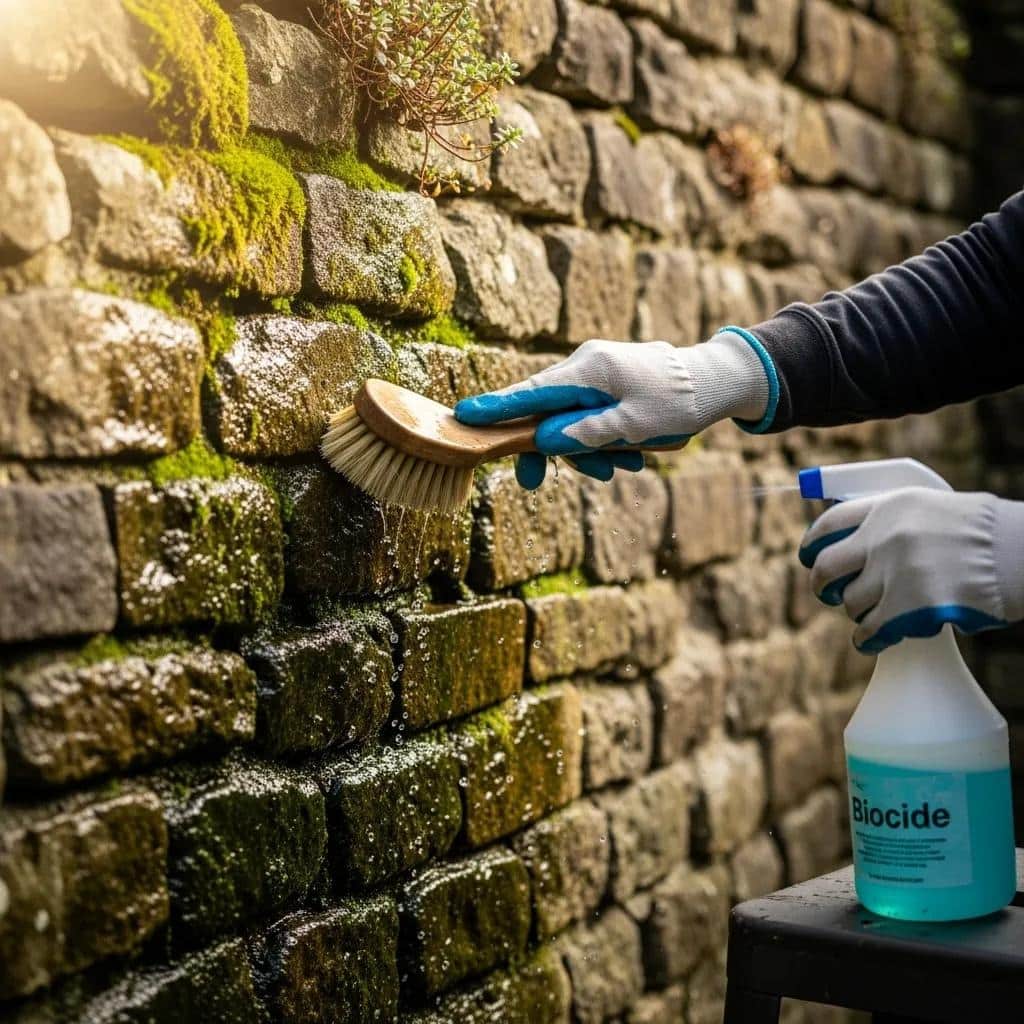
| Algae & moss | Shade, persistent moisture, and organic debris | Biocide, gentle brushing, or low‑pressure steam; improve drainage and light levels to reduce regrowth |
This matrix sets out immediate actions and longer‑term repairs to reduce recurrence. If salt damage or deep black staining persists, further specialist analysis is recommended before extensive intervention.
Solutions For Efflorescence And Black Staining Removal
Tackling efflorescence starts with locating the moisture and salt source; cosmetic cleaning alone will only see the salts return. Initial steps are dry brushing and vacuuming, moving to controlled poultices to draw out embedded salts where required.
Black stains from soot or hydrocarbons often respond to DOFF or TORC systems, with spot solvents used only after testing to confirm safety and effectiveness. Preventive measures include fixing penetrating damp, improving drainage, and repointing with breathable mortars to avoid trapping salts.
Record findings and remedial work so future caretakers understand both cause and cure. Specialist input is essential where salts indicate ongoing moisture pathways.
Removing Algae, Moss, And Pollution From Stone Surfaces
Biological growth is best treated in two stages: gentle mechanical removal, then an appropriate conservation‑grade biocide to kill spores and limit regrowth. Soft brushing or low‑pressure steam removes moss and biofilm without damaging the stone, followed by a masonry‑safe biocide chosen for the substrate.
Altering site conditions, improving drainage, pruning overhangs, and increasing light help prevent return. In heritage contexts, avoid strong oxidisers and favour reversible, material‑compatible treatments.
A planned maintenance schedule combining periodic gentle cleaning with environmental adjustments gives the most durable results for façades in polluted urban environments.
Why Choose Environ Restoration Services For Stone Masonry Cleaning In London?
Environ Restoration Services specialises in restoration, repair, and refurbishment for traditional, heritage, and high‑end properties. We deliver integrated cleaning, repointing, and damp treatments, starting with a diagnostic survey and moving to a bespoke, conservation‑led method selected for the stone and condition.
Our model emphasises traditional craft skills for heritage projects and accredited processes for more complex works. For owners wanting a professional survey, quote, and scheduled cleaning, we arrange tailored inspections and complete follow‑through repairs.
The table below links credentials and services to client reassurance and conservation benefit.
| Accreditation / Service | Benefit / Proof | How It Reassures Clients |
|---|---|---|
| SPAB | Heritage‑aligned methods | Reduces risk to the listed fabric |
| SafeContractor | Health & safety compliance | Confirms site safety standards |
| Which? Trusted Trader | Customer vetting | Builds consumer confidence |
| Repointing & Damp Treatment | Improved durability | Addresses causes, not only appearance |
These accreditations and combined services demonstrate how documented methods and careful method selection reduce risk and protect your investment in historic and high-value buildings. To request a survey or tailored advice, contact Environ Restoration Services to plan a conservation-led cleaning programme. In addition to thorough assessments, having essential tools for old house restoration is crucial for ensuring that every aspect of the project is addressed with expertise. By utilizing these tools, professionals can enhance the durability and design integrity of historical structures. Regular maintenance using the right methods keeps these priceless homes in excellent condition for generations to come.
Accreditations And Expertise Behind Our Heritage Stone Cleaning
Environ Restoration Services holds multiple accreditations that align with heritage conservation and site safety. SPAB affiliation signals methods mindful of historic fabric; SafeContractor and CHAS show compliance with safety and contractor standards.
Which? Trusted Trader offers consumer‑facing validation, and Constructionline Gold and PCA membership provide further procurement and quality assurance. Together, these credentials support confident management of sensitive restoration projects.
Clients benefit because accredited processes encourage documented, auditable practice and reduce the risk of inappropriate interventions on valuable masonry.
Our Process For Safe And Lasting Stone Restoration
Our process follows clear stages: an initial diagnostic survey, small‑scale testing, conservation‑led cleaning, remedial repairs such as repointing, and the application of breathable protection where appropriate. Each stage is recorded so owners understand the condition, chosen methods, and expected outcomes.
We provide follow‑up maintenance advice and environmental recommendations to reduce biological regrowth and salt migration. To arrange a tailored inspection and formal proposal, request a survey that specifies timescales, methods, and costs aligned with conservation needs and client priorities.
Frequently Asked Questions
What types of stone are most commonly cleaned by professionals?
Professionals commonly work on limestone, sandstone, granite, and marble. Each stone behaves differently: limestone and sandstone are porous and need gentle treatment; granite tolerates firmer mechanical action; marble is sensitive to acids and requires non-acidic methods. Knowing the stone type is essential for choosing a safe, effective cleaning approach.
How can I identify if my stone masonry needs professional cleaning?
Look for visible stains, discolouration, biological growth (algae, moss), or white powdery deposits (efflorescence). Persistent black staining or repeated salt deposits usually indicate underlying moisture or pollution issues. If you see these signs, book a diagnostic survey so the cause can be identified and the correct treatment prescribed
What are the benefits of using conservation‑led cleaning methods?
Conservation‑led methods prioritise the stone’s original fabric and long‑term performance. They remove damaging deposits while minimising material loss, maintain reversibility where possible, and reduce the risk of future problems. These tailored approaches help preserve appearance, structure, and heritage value over time.
What should I expect during a professional stone cleaning service?
Expect an initial diagnostic survey, small‑scale testing, and a documented method statement. The chosen cleaning method (DOFF, TORC, steam, poultice, etc.) will match the stone and soiling. After cleaning, you’ll receive advice on remedial repairs, protective measures, and a maintenance plan to help sustain results.