
At Environ Restoration Services, We specialise in restoring historic buildings to their former glory. We understand the importance of ensuring that your property is safe, healthy, and compliant with all necessary regulations. Our comprehensive building survey services are designed to identify any potential issues and provide you with expert advice on how to rectify them. The process of our building survey begins with an initial phone call from you, where we will gather information about your property and the issues you are experiencing. Our qualified team will then determine which surveyor/s are needed for your specific needs and provide you with a quote for the cost of the survey.
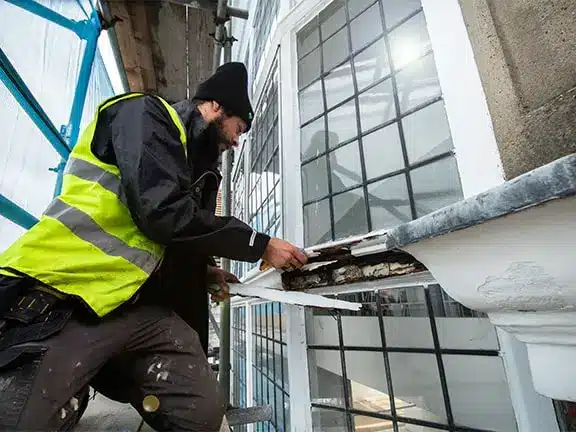
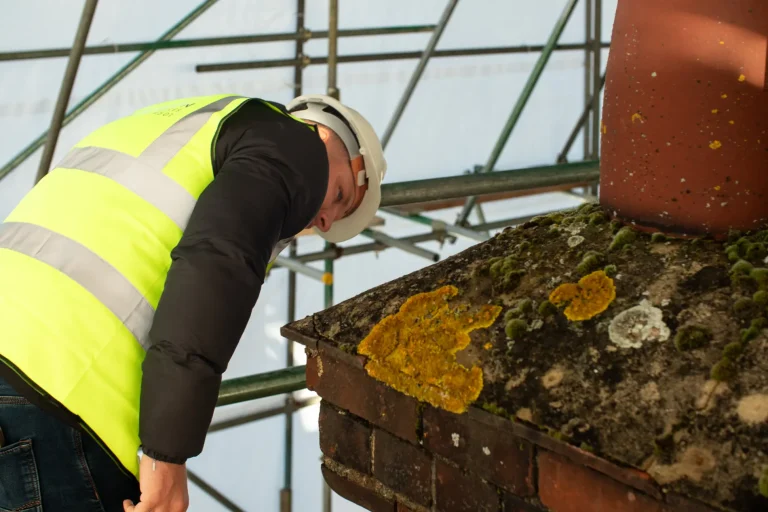
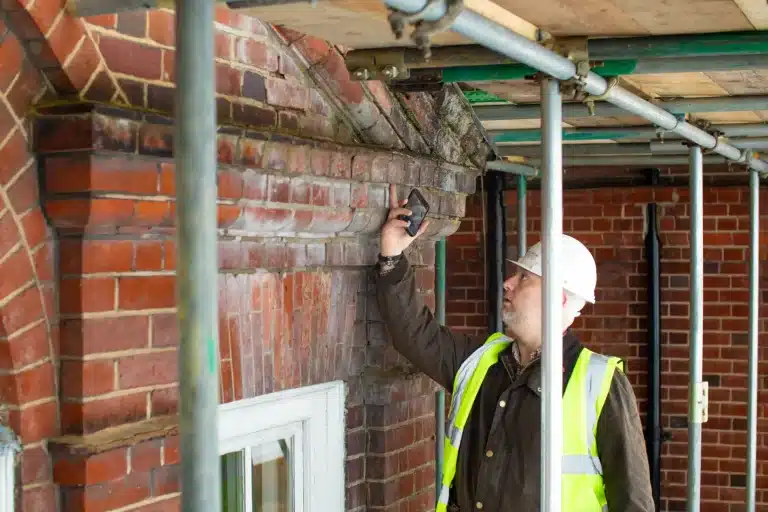
Once you have accepted our survey, we will arrange a suitable time for the visit and call you half an hour before our arrival to ensure that you are ready, and we have access to the building. During the survey, the first step in any building restoration project is to conduct an initial assessment of the exterior demise. Our surveyors will examine the building thoroughly, looking for any signs of damage or deterioration.
Depending on the chosen survey, our surveyors will then conduct a more in-depth analysis of the building’s structural integrity. This includes assessing the foundation, walls, and roof to determine if any repairs or reinforcements are needed to ensure the building’s stability. We will also conduct an analysis of the building’s materials, including the type of stone, brick, or other materials used in its construction. This helps us determine the appropriate materials to use in any restoration or repair work.
Our expert surveyors will then provide you with tailored advice on how to address any problems and provide you with a full written report. This will entail a restoration plan for the building, that will outline the scope of the work needed, the timeline for completion containing annotated images and all itemised associated costs. This detailed report will enable you to make informed decisions about how best to proceed with any necessary remedial work.
Finally, we can arrange a follow-up Zoom or Teams call with the acting surveyors, during which they will discuss the findings of the survey in detail and answer any questions you may have. Our goal is to ensure that you are fully informed about the condition of your property and have all the information you need to make the right decisions for you.

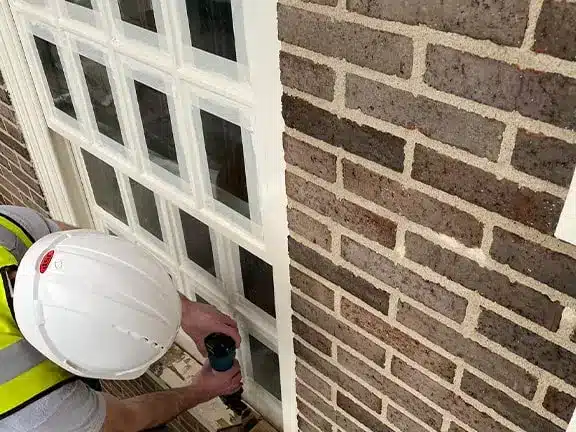
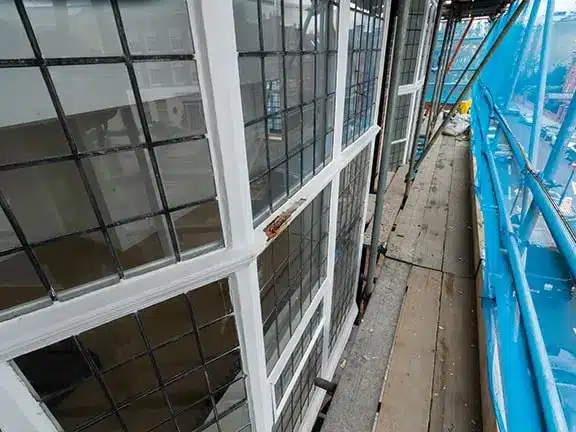
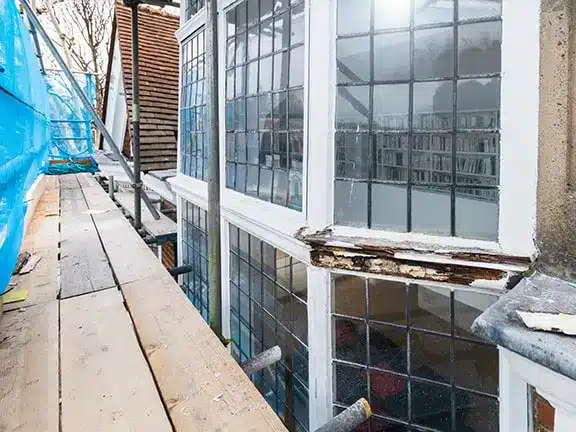
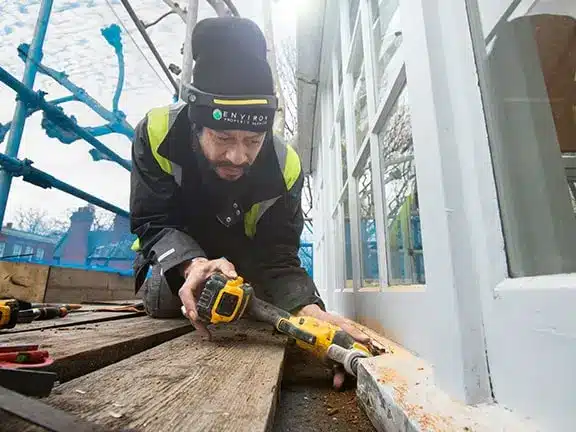
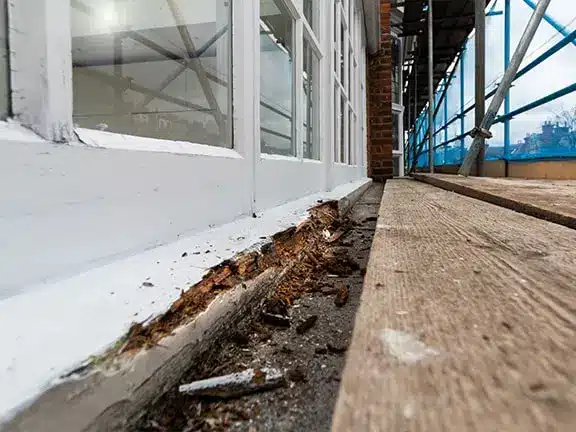
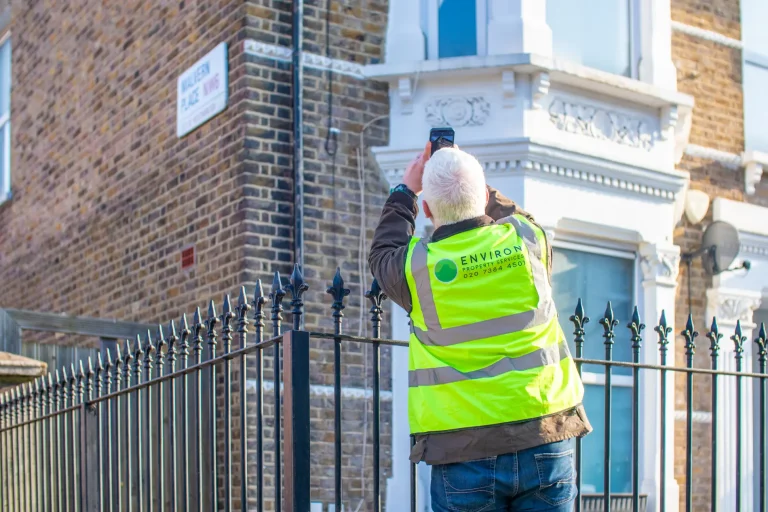
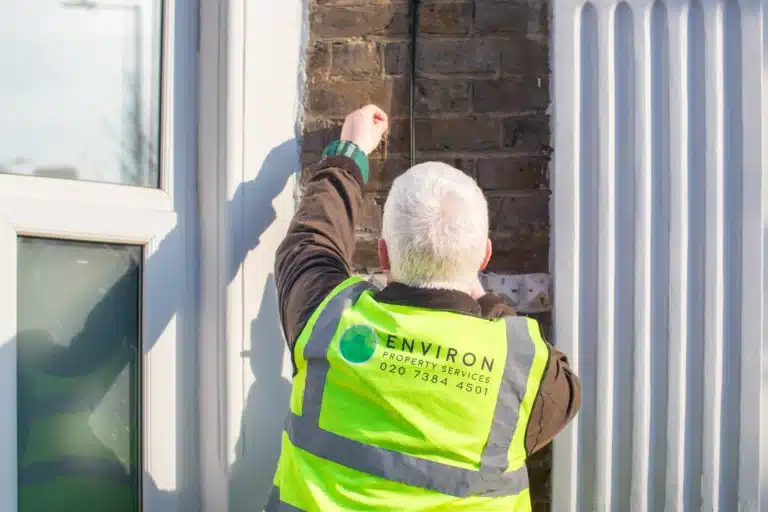
A window survey works similar to a restoration survey in the way that our expert coordinators will ask you to send photos of the problems and will discuss it with the surveyors and they will arrange a date (that is suitable for you) to come and visit the house. The only difference is that we work only timber windows, not UPVC window frames.
For a more comprehensive analysis, our advanced restoration surveys and drone assessments offer precise evaluations of hard-to-reach areas.
Also, if you are a tenant in the property that needs the repairs done to it, you will need to contact the landlord/landlady or the property owner for permission to complete these works on their building, because it is their property by law. Just to note, this applies to all our services
A window survey will cost around £250.00 + VAT per hour but may cost more for a commercial building as it is significantly bigger than a residential property, costing more time to cover every aspect. At Environ, we make sure that we can offer the best service and therefore the best surveys as well to maximise your chances of fixing your period building and maintaining it for generations to come.
The purpose of the survey is to identify any potential environmental hazards in the building, such as asbestos, mould, lead paint, or other toxins that may pose a health risk to the building’s occupants and recommend restoration techniques that are compatible with the building’s heritage value.
The duration of the survey will depend on the size and complexity of the building. However, most surveys can be completed within a 1–2-hour period, then with 4-5 hours office time preparing the report.
You do not need to be present during the survey, but you may need to provide access to certain areas of the building.
The equipment used will depend on the type of survey being performed. Common equipment includes air monitoring devices, moisture meters, sampling equipment and drones.
The results of the survey will be provided in a written report that outlines any defects found and provides recommendations for remediation and restoration.
We would conduct an initial assessment of the structure. Our surveyors will examine the building. This includes cracks in the walls, leaks in the roof, and any other issues that may impact the structural integrity of the building. Our surveyors will also conduct an analysis of the building’s materials, including the type of stone, brick, or other materials used in its construction. This helps us determine the appropriate materials to use in any restoration or repair work. Based on the information gathered during the assessment, research, and analysis phases, our surveyors will develop a restoration plan for the building. This plan will outline the scope of the work needed, the timeline for completion, and the estimated cost of the project.
asbestos surveys for historic buildings, building restoration process, restoration work, daylight surveyors parsons green london, survey works, section 20 survey, flat roof survey, restoration worker, which of the survey would be best suited for a major refurbishment project of a 1965 constructed school
The restoration process involves a series of systematic steps designed to assess and preserve the integrity of historic buildings. Initially, a detailed survey is conducted, which includes evaluating the structural condition and identifying necessary repairs to maintain the building’s historical significance.
During the restoration, specialists analyze various elements such as the foundation, walls, and roofing materials. This comprehensive assessment ensures that any restoration work is not only effective but also respectful of the building's heritage. By adhering to these principles, we can safeguard the architectural value while ensuring compliance with modern standards.
A window survey is crucial for identifying potential issues that could compromise the safety and aesthetics of a historic building. This survey typically includes a thorough examination of window frames, sills, and glazing to detect any signs of deterioration or environmental hazards.
Our trained surveyors use specialized equipment to assess the condition of windows, including moisture meters and air monitoring devices. The findings from this survey play a significant role in determining the appropriate restoration techniques that align with the building's historical context, ensuring that any repairs enhance rather than detract from its original character.
When considering a restoration survey, various factors influence the overall cost. The size of the building, the complexity of the survey, and the specific requirements of the restoration all contribute to the final pricing. For instance, larger commercial properties typically incur higher costs due to the extensive time and resources required for a thorough assessment.
On average, a window survey may start at around £250.00 + VAT per hour, but this can vary significantly based on the building's characteristics and the nature of the issues identified. Understanding these cost factors helps clients budget effectively while ensuring they receive the necessary services to maintain their properties.
Compliance with local regulations and standards is paramount in the restoration of historic buildings. This ensures that all restoration work not only preserves the building's integrity but also meets safety and environmental guidelines mandated by authorities.
Our team is well-versed in the legal requirements surrounding historical restorations, which includes obtaining necessary permissions and following best practices. By prioritizing compliance, we help protect our clients from potential legal issues while contributing to the preservation of cultural heritage.