Efflorescence, those tell-tale white, powdery salt deposits that can mar your brickwork, affects many London buildings. More than just an aesthetic issue, it’s a clear sign of underlying moisture problems that can compromise appearance and structural integrity.
Understanding how to clean efflorescence effectively is crucial for homeowners and property managers seeking lasting solutions, not temporary fixes.
This guide defines efflorescence, explains its impact on masonry, outlines common London causes, compares DIY and professional methods, and details Environ Restoration Services’ specialised removal process. You’ll also find preventive strategies, heritage considerations, FAQs, and how to request a free survey or quote for your London property.
What Exactly Is Efflorescence and How Does It Affect Brickwork?
Efflorescence refers to the crystalline salt deposits that form on the surface of porous masonry. It occurs when soluble salts within the building materials dissolve in moisture and then recrystallise on the surface as that moisture evaporates. This not only harms kerb appeal but also signals moisture penetration, which can accelerate mortar decay and lead to long-term deterioration.
Efflorescence develops when water, carrying dissolved salts from within the brick or mortar, moves through the material’s pores via capillary action. As this moisture reaches the exterior and evaporates, it leaves behind the characteristic white or grey salt deposits.
Over time, repeated cycles of crystallisation can enlarge pore spaces, reduce resistance to freeze-thaw cycles, and weaken mortar joints. Identifying these deposits early is key to timely repairs, preserving both structural soundness and the aesthetic character of your property.
Types and Visual Signs of Efflorescence on Brick
- Primary Efflorescence: This type typically appears shortly after construction. It arises from inherent salts in new bricks, mortar, or other materials that migrate to the surface as new buildings dry out.
- Secondary Efflorescence: This occurs in established brickwork and is usually caused by external moisture. Common culprits include rising damp, water ingress via leaks, or poorly managed rainwater..
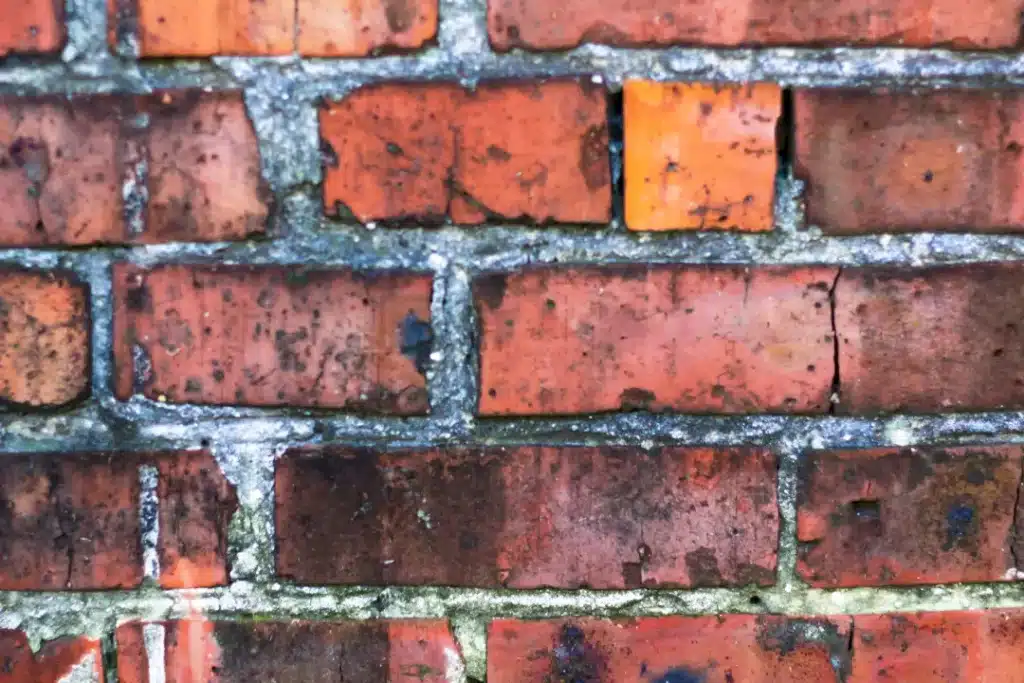
Common visual indicators include chalky white crusts on brick faces, a salt bloom around mortar lines, and a powdery residue that often brushes off easily. These clues help identify the efflorescence type and the moisture pathway.
Salts and Chemical Compounds Behind Efflorescence
Efflorescence is typically caused by soluble salts, commonly calcium carbonate, sodium sulphate, and potassium chloride. Calcium carbonate often originates from lime-based mortars, while sodium and potassium salts can derive from the ground or construction materials.
When these salts dissolve in water, they move through the masonry and crystallise upon evaporation, forming the visible deposits we recognise as efflorescence.
Why Efflorescence Matters for Brick and Masonry
Efflorescence is a concern because it signals active moisture movement within the masonry. As salts crystallise in brick pores, crystal growth exerts pressure that can cause micro-fractures, surface spalling, and mortar degradation.
Beyond appearance, untreated efflorescence indicates water ingress that can foster mould, worsen freeze-thaw damage, and undermine long-term durability.
What Causes Efflorescence on Brickwork in London Properties?
The formation of efflorescence requires three elements: soluble salts in the masonry, enough moisture to dissolve them, and a surface for evaporation.
In London’s typically damp climate, frequent rainfall, condensation, and rising damp often provide the moisture. The salts can be inherent in materials or introduced from the environment. Together, these conditions promote salt migration and efflorescence.
How Salts, Moisture, and Evaporation Create Efflorescence
Soluble salts, naturally present in many bricks and mortars, dissolve when they contact water from rain, groundwater, or condensation. Capillary action draws this saline solution through the pores towards the drier exterior. As moisture evaporates, salts remain, crystallising into visible deposits. This repeats with every wet-dry cycle, causing persistent efflorescence.
Environmental and Construction Factors That Increase Efflorescence Risk
Environmental influences matter. Heavy rainfall, high humidity, and winter freeze-thaw cycles increase moisture penetration.
Construction issues, such as an improper mortar mix, missing or failed damp-proof courses, inadequate cavity drainage, or blocked weep holes, allow water to accumulate and drive salt migration. When these variables combine, persistent efflorescence on London properties becomes more likely.
How Moisture Penetration Leads to Salt Deposits on Brick
Moisture infiltrates through unsealed joints, porous mortar, and foundation defects. Inside the masonry, water dissolves soluble salts. Capillary action then draws the saline solution through the brick and mortar pores. As it reaches exterior surfaces and evaporates, it leaves the familiar white or grey deposits of efflorescence.
How to Remove Efflorescence from Brick: DIY vs. Professional Methods
Effective removal means cleaning visible deposits and addressing the moisture source. DIY methods may clear light surface salts but risk incomplete results and ignore root causes. Professional methods pair targeted cleaning with moisture diagnostics to deliver long-lasting results.
Common DIY Efflorescence Cleaning Techniques and Risks
Many DIY enthusiasts use stiff brushes to dislodge powdery deposits or diluted acetic acid (vinegar) to dissolve salt. However, these methods can scratch the brick, oversaturate the masonry, and fail to reach salts deeper in the pores. Without tackling the moisture source, efflorescence often returns within weeks. To effectively combat efflorescence, it’s crucial to address the underlying moisture issue first, which may involve improving drainage or sealing the brick. For those committed to preserving the integrity of their masonry, adopting expert-recommended ultimate brick cleaning tips can enhance the longevity of the surfaces. These tips often include using specialized cleaning solutions that penetrate deeper without risking damage to the brickwork.
When to Choose Professional Efflorescence Cleaning
Choose professional removal when deposits are extensive, the problem recurs despite DIY efforts, or the property is heritage or high-value brickwork where preservation is paramount. Expert diagnosis of moisture sources is essential to prevent repeat outbreaks and safeguard long-term masonry health.
Discover Environ Restoration Services’ Proven Efflorescence RemovalDiscover Environ Restoration Services’ Expert Efflorescence Removal Process
At Environ Restoration Services, we implement a meticulous, multi-stage workflow: identify moisture pathways, apply specialist cleaning agents, and install preventive measures. This is designed to provide lasting protection against their return.
Our Safe Cleaning Techniques and Products for Efflorescence Removal
We employ advanced techniques that encapsulate salts for thorough extraction. This is often followed by low-pressure steam cleaning, which gently flushes deeper deposits from the pores. This combination protects masonry from chemical damage and preserves delicate mortar joints, making it suitable for both modern and historic brickwork. Additionally, our approach minimizes the risk of water damage, ensuring the longevity of the structure. We consistently refine our processes to ensure we utilize the best methods for cleaning bricks, addressing the unique needs of each project. This dedication to quality leaves surfaces not only clean but also revitalized, enhancing the overall appearance of the masonry.
How We Prevent Efflorescence from Returning
After cleaning, we apply breathable masonry sealants to reduce water ingress. We also ensure damp-proof courses are correctly installed or repaired and that drainage channels function properly. Our team advises on maintenance, gutter cleaning, cavity ventilation, and inspection schedules to keep brick surfaces dry and salt-free.
How to Prevent Efflorescence from Returning on Your Brickwork?
Preventing future efflorescence means controlling moisture entry, sealing porous surfaces, and maintaining effective drainage. A proactive plan safeguards both the appearance and structural integrity of your brickwork over the long term.
Before you start, consider these strategies:
- Masonry Sealants and Water-Repellent Coatings: Apply breathable sealants that block external water ingress while allowing trapped moisture to escape.
- Damp-Proof Courses and Barriers: Ensure horizontal damp-proof membranes are correctly installed or repaired to interrupt upward moisture (rising damp) and prevent salt migration.
- Improved Drainage and Ventilation: Regularly clear gutters, downpipes, and weep holes to divert water from the brickwork and promote airflow behind walls.
- Routine Inspection and Cleaning: Schedule regular checks for blocked drainage systems, cracked mortar joints, or early signs of salt bloom. Addressing any issues promptly can prevent them from escalating.
By combining these tactics, you can significantly reduce moisture penetration and eliminate salt pathways, lowering the risk of efflorescence reappearing on your London brick façades.
Effective Masonry Sealants and Damp-Proofing Against Efflorescence
Breathable, silicone-based water-repellent coatings and advanced silane/siloxane treatments are highly effective. These solutions penetrate deeply into brick pores to repel liquid water while allowing water vapour to diffuse outwards.
Combined with correctly positioned damp-proof courses and effective chemical injection barriers, they create a robust defence against salt-laden moisture reaching the surface.
How Proper Drainage and Ventilation Reduce Efflorescence Risk
Ensure gutters are clear, downpipes function correctly, and cavity weep holes are open. This diverts rainwater from the masonry, minimising prolonged wetting. Adequate roof ventilation and airflow in wall cavities help evaporate residual moisture, interrupting the wet-dry cycle essential for efflorescence.
Maintenance Practices for Long-Term Brickwork Preservation
Consistent upkeep is vital: clean gutters and downpipes, schedule professional inspections of mortar joints, repoint where necessary, and remove vegetation close to brickwork. These practices maintain the protective envelope and enable early leak detection, minimising conditions that favour salt migration.
How Efflorescence Removal Differs for Historic and High-End London Properties
Historic and high-end brick buildings often feature unique materials and aged mortars that require a delicate, specialised approach. Aggressive methods can strip patina, damage softer bricks, and violate conservation guidelines. Tailored, gentle approaches are essential to preserve heritage value and character.
Specific Challenges in Cleaning Efflorescence on Historic Brickwork
Historic bricks and traditional lime-based mortars often have higher porosity and lower compressive strength than modern materials, making them more susceptible to damage from harsh methods like acid etching or abrasive cleaning. Conservation standards favour minimal intervention and low-impact techniques that preserve original textures and mortar integrity.
Gentle Cleaning Methods for Heritage Properties
Effective, heritage-safe techniques include poultice applications to draw out salts gently from within the masonry. Low-pressure steam flushing rinses pores without abrasive force. Additionally, mild, non-ionic detergents lift deposits without altering the brick’s natural colour or finish. These methods align with conservation best practices, especially for listed structures. Moreover, employing minimal moisture during cleaning processes helps prevent damage to the underlying materials, making these methods one of the best ways to clean brick. Regular maintenance using these techniques can significantly prolong the lifespan of masonry while preserving its historical integrity. Ultimately, adhering to established conservation practices ensures that the aesthetic and structural qualities of the brick are retained for future generations.
Examples of Successful Efflorescence Removal on London’s Historic Buildings
Our London projects prioritise preserving original handmade bricks and delicate lime mortars in Victorian and Georgian properties across central areas, with before-and-after results that respect surface character and patina.
Common Questions About Cleaning Efflorescence from Brick
Property owners often ask about safe removal methods, effective products, and whether efflorescence will disappear on its own. Addressing these concerns helps select solutions that remove the problem and protect brick surfaces for years.
How Do You Safely Remove Efflorescence from Brick?
Safe removal begins with gentle dry brushing to clear loose salts, followed by controlled application of non-acidic neutralisers and a low-pressure steam or water rinse. This sequence dissolves and extracts surface and embedded salts without damaging brick or mortar.
Will Efflorescence Disappear Without Treatment?
While light efflorescence might fade during dry spells, underlying salts remain in the pores and will likely recrystallise and reappear when moisture rises. Only targeted cleaning, combined with effective moisture control, reduces recurrence and achieves thorough removal.
Is Efflorescence Harmful to Brickwork?
The presence of efflorescence itself is a symptom, indicating moisture movement and salt crystallisation. If left unaddressed, this process can weaken mortar joints, reduce the brickwork’s resistance to freeze-thaw damage, and lead to gradual decay of the masonry over time. Prompt removal and effective moisture management are crucial for protecting structural integrity.
How Much Does Professional Efflorescence Removal Cost in London?
The cost of professional efflorescence removal in London varies by property size, deposit severity, and the scope of moisture remediation.
We provide a survey-based quotation tailored to your property, with lower costs for smaller façades and higher costs for extensive projects requiring moisture-barrier installations. A tailored survey provides precise pricing based on your site conditions.
How to Request a Free Survey or Quote for Efflorescence Removal in London
Environ Restoration Services offers complimentary surveys and no-obligation quotes to diagnose efflorescence and explore bespoke solutions. Our team provides a swift assessment and a transparent cost estimate, tailored to your property’s unique requirements.
Information Needed for a Survey
To help us prepare for your survey, please provide your property address, a brief description of the affected brickwork area, and any known history of damp issues or previous cleaning attempts. Including photographs of the salt deposits can also be very helpful for our surveyors in planning an accurate on-site inspection.
Next Steps After Receiving a Quote
Once you approve our proposal, we’ll schedule a convenient start date, confirm health and safety protocols, and deploy our specialist crew. Throughout the project, we maintain ongoing communication so you’re informed at every stage of the removal process.Efflorescence removal is more than clearing salt stains. It means diagnosing moisture at the source, protecting your masonry, and preserving property value. With Environ Restoration Services’ brick cleaning service, London property owners can trust experienced professionals focused on lasting results and structural integrity. Our approach not only enhances the aesthetic appeal of your property but also safeguards it against future damage. If you’re wondering what is brick cleaning, it involves deep cleaning techniques that remove dirt, grime, and efflorescence, rejuvenating the bricks and ensuring their longevity. Trust us to restore your masonry to its former glory while maintaining its structural health.