At Environ Restoration Services, we describe damp-proof injection as a minimally invasive chemical damp-proof course (DPC) that establishes a long-lasting moisture barrier inside masonry to halt rising damp in older and period properties.
This guide sets out what a chemical DPC is, how it works, how to spot rising damp, and what to expect from typical cost estimates in London. Many homeowners confuse rising damp with condensation or penetrating damp; getting the diagnosis right matters because treatments and costs differ.
Below, we walk through the injection process, clear signs to watch for, the main cost drivers, and sensible next steps so you can decide when to book a professional damp survey.
What Is Damp-Proof Injection And How Does It Work?
Damp-proof injection involves inserting a water-repellent chemical into the base of a wall to interrupt the capillary rise of ground moisture through masonry.
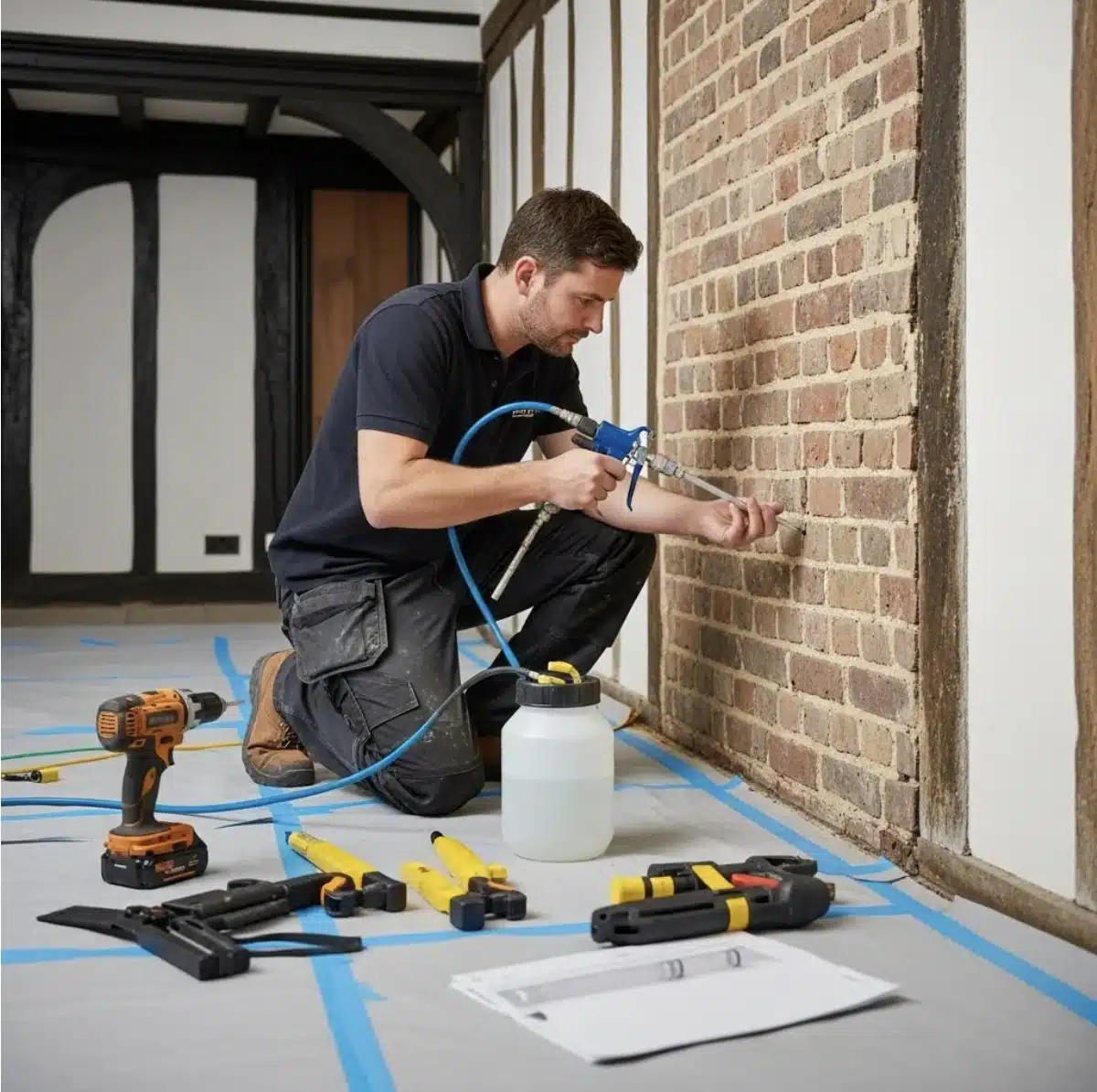
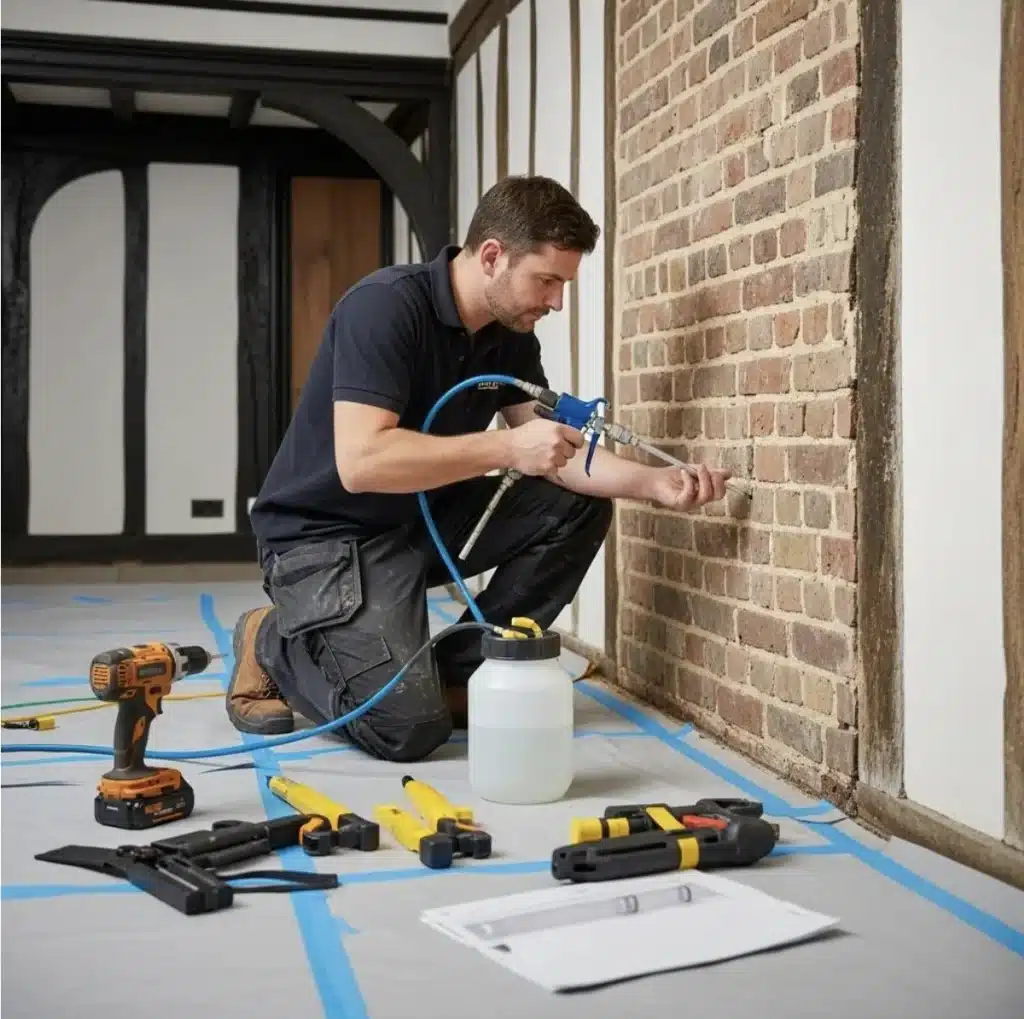
In practice, small holes are drilled into mortar or brick courses, a cream or fluid is injected (either under pressure or by static fill), the chemistry bonds with the masonry to create a hydrophobic layer, and once cured, any damaged plaster is reinstated.
The result is a chemical DPC that restores a capillary break without removing large sections of wall, a low-disruption solution for homeowners. Correct material selection and careful application are essential for durability and compatibility with breathable, historic finishes.
Independent laboratory tests and review studies identify chemical injection damp-proof courses (often based on silane/siloxane creams) as a contemporary remedial method designed to interrupt or reduce capillary rise of moisture in masonry walls.
| Approach | Characteristic | Typical Use |
|---|---|---|
| Silane/siloxane cream | Low‑viscosity cream that penetrates mortar and forms a water‑repellent layer | Standard masonry where reliable product penetration is required |
| Siloxane fluid | Solvent-based fluid suited to denser substrates; offers good capillary penetration | Dense brickwork or situations where deeper dispersion is needed |
| Silicone resin cream | Thicker formulation, well suited for static injection cartridges | Localised repairs and areas with tight mortar joints |
Material chemistry governs penetration depth, curing behaviour, and compatibility with breathable finishes, factors that determine whether subsequent replastering with salt-retardant materials will be necessary. Choosing the right chemistry naturally leads to the practical application steps outlined below.
Correct replastering is a vital part of long-term damp control; specification guides can help you choose appropriate finishing materials and methods.
Understanding Chemical DPC and Its Role
A chemical DPC replaces or supplements a failed physical damp-proof course by forming a hydrophobic layer inside the wall that reduces capillary action. Active agents such as silane and siloxane alter internal pore surfaces so water is repelled while vapour can still pass, helping preserve breathability in traditional construction.
Regulatory guidance and industry best practice define appropriate application rates and hole spacing; specifying the correct chemistry avoids trapping salts or creating incompatible finishes. Accurate material choice and follow-up replastering with breathable, salt-retardant plaster are essential to achieve a lasting repair and lower the risk of recurrent damp.
This role of the material explains how the process is adapted for London’s period properties.
Damp-Proof Injection For Rising Damp In London Properties
In London, rising damp commonly affects Victorian, Georgian, and Edwardian terraces where original DPCs have failed or are bridged by raised external ground levels or internal finishes.
Injection techniques are adapted for lime mortars and softer brick: lower-pressure creams or fluids are used so the fabric is not damaged, and conservation-sensitive drilling patterns and discreet remediation keep visual impact to a minimum.
For listed buildings and sensitive interiors, we pair the chemical DPC with breathable lime or salt-retardant replastering to meet conservation requirements. Where injection is unsuitable, for example, when salt contamination or structural decay is extensive, a survey may recommend full DPC replacement or engineered remedial works.
Here’s a clear checklist of what typically happens on site.
- Drill a line of small holes at the base of affected walls, following the specified spacing pattern.
- Inject the chosen chemical DPC cream or fluid into each hole until absorbed.
- Allow the treatment to cure and redistribute through capillaries; follow‑up testing can confirm effectiveness.
- Remove degraded plaster and reinstate with appropriate breathable, salt-retardant materials where needed.
These steps set practical expectations and link directly to the visual signs that typically indicate rising damp.
What Are The Signs Of Rising Damp In Your Property?
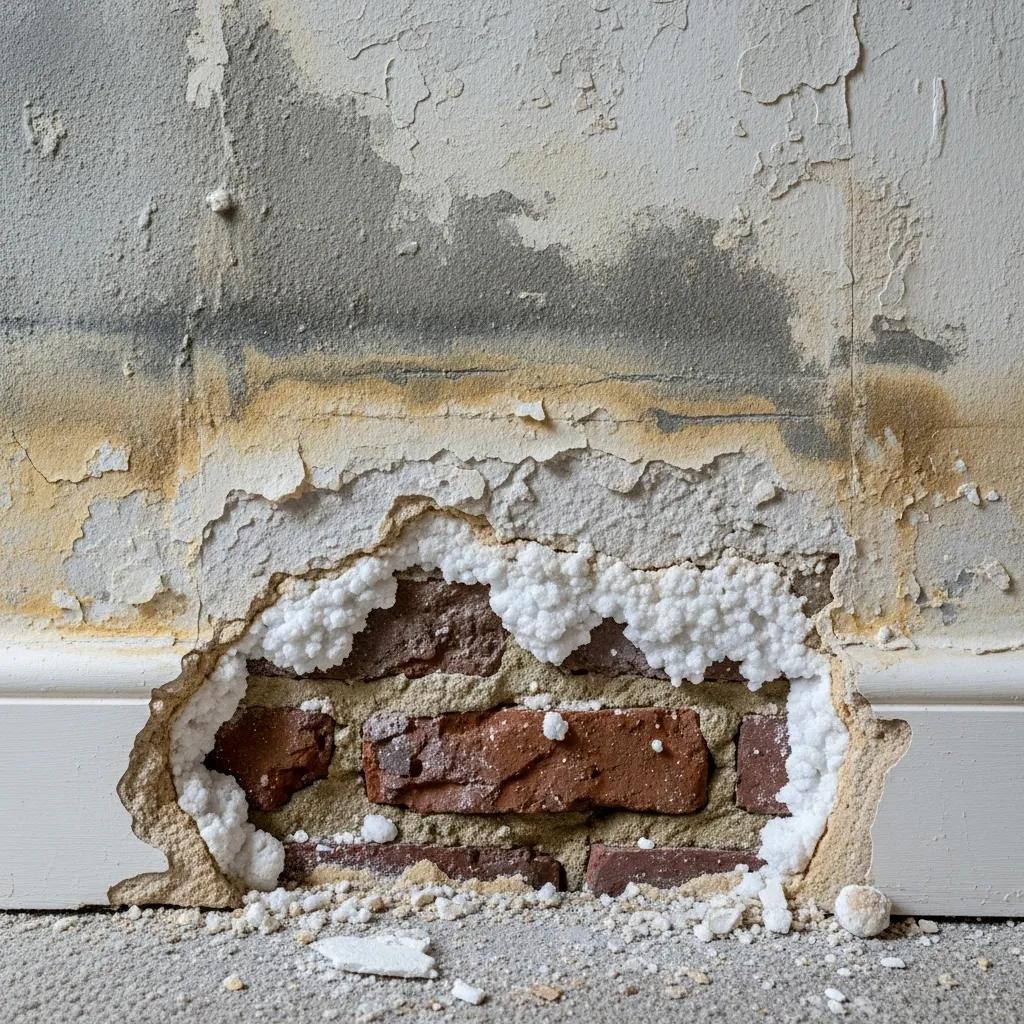
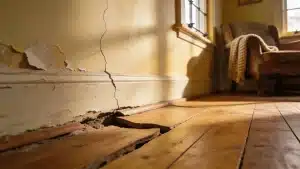
Rising damp usually appears as moisture creeping up from the base of internal walls, visible through tide marks, peeling paint, and decayed plaster. Spotting these signs early helps prevent further damage to fabric and indoor air quality.
A quick visual checklist helps distinguish rising damp from hygroscopic salt deposits or condensation: rising damp typically produces lower-wall tide marks and degraded plaster to a limited height, whereas condensation tends to affect upper surfaces and corners.
Look for salt deposits, check skirting boards and nearby timber for rot, and note musty odours, all useful first steps before commissioning a professional damp survey.
Early, accurate recognition reduces the risk of inappropriate remedial work and points you towards targeted treatments such as chemical DPC or more extensive restoration when required.
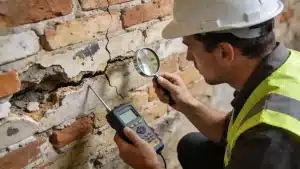
Professional damp surveys and surveyor performance standards have been explored in academic work, underlining the value of a careful, thorough inspection.
Common visible symptoms are summarised below for quick reference.
- Tide marks: Horizontal staining from the floor indicating capillary rise.
- Peeling or blistering paint: Finish flaking off low on walls as plaster deteriorates.
- Efflorescence (salt crystals): White powdery deposits signalling salt migration.
- Musty odour or mould at skirting level: Persistent damp smell or visible mould colonies near the floor.
These visual clues should prompt a professional damp survey rather than immediate DIY replastering, which can conceal ongoing moisture problems.
| Symptom | Likely Cause | Recommended Immediate Action |
|---|---|---|
| Tide marks and damp plaster low on the wall | Rising damp from a failed DPC or ground bridging | Photograph the area, avoid plastering over it, and arrange a damp survey |
| White salt crusts (efflorescence) | Salt migration from damp masonry | Collect dry samples and commission a survey to assess the salt load before replastering |
| Peeling paint and plaster collapse | Long‑term moisture weakens the plaster | Carefully remove loose material and seek a professional damp diagnosis |
This table links common symptoms to probable causes and practical short-term actions to secure the property until a survey determines the correct remedial route.
Identifying Visual Symptoms Like Tide Marks And Peeling Paint
Tide marks are the classic sign of rising damp, darker bands or staining a short distance above floor level, where moisture is drawn up through capillaries. Peeling paint, flaking plaster, and soft render indicate salt-laden moisture has broken the bond of finishes, which often leads to repeated deterioration after superficial repairs.
Photograph affected areas, note the height of damage, and check whether outside ground levels or internal features might bridge the DPC. This information helps a surveyor reach an accurate diagnosis and plan durable repairs.
Recognising The Health And Structural Impacts Of Rising Damp
If left untreated, rising damp accelerates timber decay, encourages wet rot, and creates conditions for mold that can harm indoor air quality and increase allergen exposure, especially in poorly ventilated rooms.
Structurally, salt crystallisation within masonry causes plaster to spall and can weaken bricks and mortar over time, increasing repair scope and cost. Prompt diagnosis and correctly specified treatment protect both occupant health and the building fabric and avoid unnecessary or inappropriate interventions.
These risks are why we recommend a tailored professional damp survey as the next step.
How Much Does Damp-Proof Injection Cost In London?
Indicative cost guidance for damp-proof injection in London depends on wall type, site access, and whether plaster replacement is required. The prices below are qualitative ranges; a firm price always follows a site survey.
Per linear metre, costs are commonly in the low to mid hundreds of pounds for straightforward, accessible walls; whole-property projects for small terraces or flats typically sit in the lower thousands, depending on scope. Major cost drivers include scaffolding or difficult access, the extent of salt contamination, and any required reinstatement, plastering, or timber repairs.
A professional survey that tests moisture and salt levels, inspects substrate, and scopes necessary repairs is the only reliable way to produce a bespoke quote.
Here’s an at-a-glance cost breakdown showing typical inclusions so you know what a quoted price typically covers.
| Item | Typical Range | Includes |
|---|---|---|
| Per linear metre | Low to mid hundreds of pounds (indicative) | Drilling, injection materials, and site cleanup |
| Small whole‑property project | Lower thousands of pounds (indicative) | Survey, injection, and local plaster repairs |
| Larger or heritage projects | Mid‑range to higher, depending on scope | Specialist materials, access arrangements, and conservation liaison |
Typical pricing per linear metre and whole-property estimates
Specific prices must come from a site survey. Per-metre pricing is influenced by accessibility, material choice, and hole spacing, and often excludes replastering or timber repairs.
Whole-property estimates therefore vary: a modest flat with limited affected walls will be at the lower end of the scale, while a large period house with salt-damaged plaster and conservation constraints will be at the higher end.
Always confirm whether a quotation includes a pre-treatment damp survey, laboratory salt testing, and the cost of compatible replastering. Checking these inclusions helps you compare value rather than price alone.
Factors Influencing Damp Proofing Costs And Value
Several technical and logistical variables determine cost and long-term value: wall material and thickness, level of salt contamination, access for drilling and equipment, required scaffolding, and conservation requirements for listed fabric.
Additional works such as timber repairs, basement tanking, or fixing defective external drainage will increase the scope and cost. Conversely, correct diagnosis and a comprehensive remedial specification improve long-term value and reduce recurrence risk.
When assessing quotes, prioritise warranty terms, inclusion of diagnostic testing, and specification of breathable finishes where required. These considerations point to choosing a suitably accredited specialist to carry out the work.
- Property construction: Brick type, mortar, and wall thickness affect penetration and material choice.
- Extent of damage: High salt loads or widespread plaster failure increase remedial scope.
- Access and logistics: Scaffolding, traffic management, and restricted access raise costs.
- Conservation requirements: Listed buildings need bespoke methods and liaison, which can increase the price.
These factors show why contacting an accredited specialist for a site survey is the recommended first step, rather than relying on online estimates alone.
Why Choose Environ Restoration Services For Damp Proofing In London?
Environ Restoration Services is a London-based restoration specialist offering damp proofing alongside a wider suite of conservation-aware services, an appropriate choice where heritage sensitivity or high-quality finishes matter.
Our team emphasises traditional craftsmanship applied to damp control and includes related work such as London restoration, brick cleaning and repointing, period roofing repairs, sash window repair, heritage works, and basement tanking.
This breadth means our surveyors understand the adjacent issues, for example, defective brickwork or external drainage, that commonly influence rising damp diagnosis and treatment.
If you need a professional damp survey and a bespoke quote, we provide site assessments and clear follow-up recommendations tailored to period properties and conservation requirements.
- SafeContractor
- SPAB (Society for the Protection of Ancient Buildings)
- Which? Trusted Trader
- BPCA (British Pest Control Association)
- CHAS
- Constructionline Gold Member
- PCA (Property Care Association)
- Qualitymark
- TrustMark
These accreditations signal adherence to industry standards and best practices. When you request a quote, ask for details of guarantees, relevant case studies, and references so the scope and aftercare are clear.
If you need a bespoke damp survey, a professional inspection is the only reliable way to confirm whether damp-proof injection is the right solution and to receive a fixed-price proposal for London properties.
Expertise In Heritage And Luxury Property Damp Treatments
Treating listed and period properties needs a careful balance between effective moisture control and breathable, reversible repairs that respect original fabric. Our craft-led approach aims to deliver that balance:
Surveys consider appropriate material selection, for example, lime-based replastering after chemical DPC in sensitive settings, and include liaison with conservation officers when required. We use discreet injection patterns and minimise visual disruption in luxury interiors to preserve finishes while addressing underlying damp.
Requesting documented case studies and method statements during the survey helps ensure the proposed approach matches conservation objectives and long-term performance expectations.
Accreditations, Guarantees, And Customer Testimonials
The accreditations listed above reflect formal industry recognition and competence in restoration and damp control, offering reassurance when selecting a contractor for chemical DPC work.
Good practice pairs a thorough diagnostic survey with a written guarantee and clear aftercare advice; when requesting a quote, check the guarantee scope, what is covered, and any conditions related to environmental changes or external works.
We can supply references and examples of similar projects during the survey stage to demonstrate outcomes. To obtain a bespoke quote or arrange a site survey, request a professional inspection and written estimate so you have a clear scope, specification, and price before any work begins.
Frequently Asked Questions
What Are The Long-Term Benefits Of Damp-Proof Injection?
Damp-proof injection offers a durable method to tackle rising damp, reducing the risk of moisture-related problems such as mould growth, timber decay, and structural deterioration. Creating a hydrophobic barrier within the masonry helps protect the building fabric and can improve indoor air quality. Implementing effective damp proofing techniques is essential for long-term property maintenance and preservation. This approach not only enhances the structural integrity of buildings but also ensures a healthier living environment by mitigating the effects of moisture intrusion. Homeowners should consider regular inspections and preventive measures to safeguard against future damp issues.
Effective damp proofing also helps preserve property value and reduces future repair bills, particularly important in older properties where rising damp is more common.
How Can I Prepare My Property For A Damp-Proof Injection Treatment?
Before treatment, clear the area adjacent to the affected walls so technicians have easy access. Move furniture and obstructions away, and if possible, remove surface treatments (paint, wallpaper) that might interfere with inspection.
It’s advisable to have a professional damp survey first so the scope of the work is clear and the correct method and materials are specified.
Can I Perform Damp-Proof Injection Myself?
While DIY injection kits exist, we generally do not recommend that homeowners undertake this work without professional guidance. Correct application requires knowledge of materials, substrate behaviour, and potential complications.
A specialist will apply the correct product, assess salt load, and ensure compliance with regulations, crucial for heritage properties where preservation is essential.
What Should I Expect During The Damp-Proof Injection Process?
A technician will drill small holes into the mortar or brickwork at the base of affected walls and inject a chemical damp-proofing solution to form a moisture barrier.
The treatment is usually quick and minimally invasive, often completed in a day. After injection, the material needs time to cure before any replastering or finishing work is carried out to ensure the treatment is fully effective.